

The elasticity of Dr Debo Akande’s passion for humanity is, by all accounts, limitless. As the Director-General of the Oyo State Agribusiness Development Agency (OYSADA) and Executive Adviser to Governor Seyi Makinde, Dr Debo Akande does not just view agriculture through the cold lens of statistics or yields. For him, the sector is a vessel for dignity, a sentiment forged in the crucible of his own early struggles.
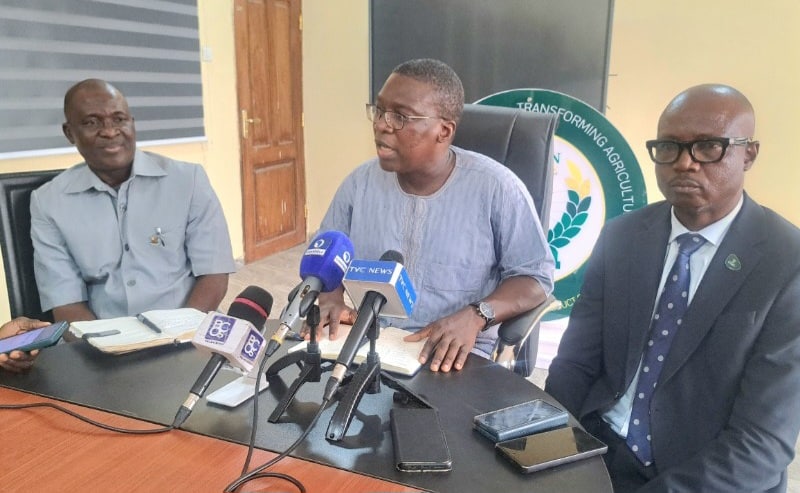
During a briefing in Ibadan on Friday, Dr Akande offered a rare, poignant glimpse into the personal history that fuels his professional drive.
“Helping people has always been my driving force; it is the work that gives my life meaning, I finished secondary school at 15, but due to my father’s death, I spent nine years hawking goods at traffic stops to fund my path to university. Those years taught me resilience and a deep commitment to lifting others up at every opportunity I have,” he reflected.
It is this lived experience of hardship that Dr Akande has brought to the forefront of his tenure. Since his appointment, he has transformed his role into a mission to overhaul the Pacesetter State’s agricultural landscape. He ensures that its primary actors, particularly the youth, are not just labourers, but empowered “agropreneurs.”
From Training to Transformation: The N1.5bn Injection
The most recent manifestation of this vision is a landmark N1.5 billion interest-free loan scheme. Set to be flagged off on Monday, 23 March 2026, this initiative targets 1,000 young entrepreneurs who have demonstrated a commitment to the sector.
Dr Akande revealed that under the Governor Makinde-led administration, OYSADA has already equipped 5,020 youths with modern agribusiness skills. However, he is acutely aware that training without capital often leads to stagnation. To bridge this gap, the agency collaborated with First City Monument Bank (FCMB) and the Mastercard Foundation to provide government-backed financing for those with active enterprises.
A Rigorous Path to Funding
The selection process was a masterclass in transparency. Dr Akande explained the “triangulation method” employed by the agency:
- Verification: Confirming that companies are currently engaged in genuine agricultural projects.
- Site Inspections: Validating physical business locations to ensure authenticity.
- Physical Interviews: Engaging directly with applicants to assess their vision and viability.
- Financial Screening: A final audit by FCMB to ensure beneficiaries maintain a clean credit history.
A Global Magnet for Investment
Dr Akande’s strategic navigation has repositioned Oyo State on the global agribusiness map. To date, the administration has attracted over N46.6 billion in private investment and secured nearly $170 million from international development funds. This influx of capital has birthed a new industrial era, attracting 14 major processing companies.
“We are seeing the tangible impact of these investments,” Akande noted. He added that “The Fasola Agribusiness Hub alone has attracted N17 billion, with 14 companies cultivating over 950 hectares. They are processing everything from cashew and cassava to tomato, alongside dairy production from nearly 1,000 lactating cows.”
The Fasola Model: Nigeria’s Agricultural Blueprint
Fasola stands as a testament to Dr Akande’s philosophy of integration. As Nigeria’s first designated Agricultural Transformation Centre, it has successfully linked approximately 8,200 smallholder farmers with major investors.
“Fourteen agribusinesses are currently operational at Fasola,” he said. “Some focus on cultivation, others on processing, and one even provides equipment leasing. These investors have cultivated 950 hectares without government intervention in inputs or labour. This, in its purest form, is the essence of agribusiness.”
Echoing this sentiment of long-term sustainability, Mr Friday Nwokolo of FCMB noted that the partnership had been eighteen months in the making. The planning process ensures that beneficiaries receive the highest possible value. Through Dr Akande’s leadership, agribusiness in Oyo State is no longer just about farming; it is about rewriting the stories of thousands of young people.