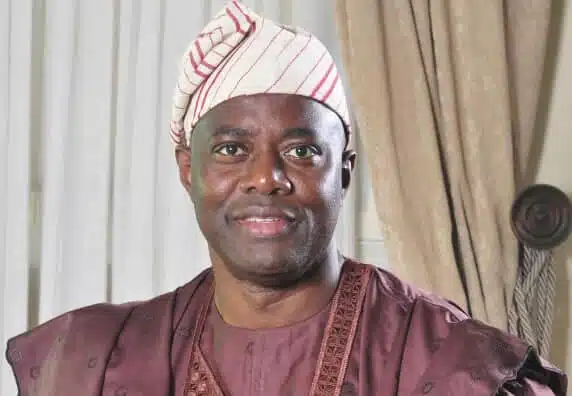


History occasionally hides its deepest ironies in names. More than two thousand years after Zacchaeus, the biblical tax collector of Jericho, climbed a sycamore tree in search of Jesus, Nigeria finds itself in the middle of an intense national conversation on Nigeria tax reform under the supervision of a modern tax administrator bearing a remarkably similar name: Zacch Adedeji.
The coincidence is striking, but the deeper significance lies not in personalities or names. It lies in the enduring suspicion societies often reserve for those who stand between the state and the pockets of the people. This ancient tension now echoes faintly but unmistakably within contemporary Nigeria, where aggressive revenue expansion, economic hardship, public distrust, and growing complaints over multiple taxation have combined to produce a climate of fiscal anxiety.

Ancient Lessons for modern Nigeria Tax Reform
From ancient Rome to modern Africa, taxation has never been merely an economic exercise. It has always been a moral and political test of legitimacy, fairness, and public trust. Empires have risen on efficient tax systems and weakened under the weight of exploitative ones. Revolutions have erupted not simply because taxes existed, but because citizens believed the burden was unjustly imposed or dishonestly managed. The hostility toward tax collectors in biblical Judea was therefore not accidental; it reflected a society that associated revenue extraction with oppression, inequality, and collaboration with distant power.
Yet beneath the noise of politics and policy lies a deeper question that civilizations have wrestled with for centuries: why do citizens willingly surrender a portion of their earnings to the state, and what happens when they no longer trust the custodians of that sacrifice?
The biblical Zacchaeus occupies a unique place within that historical conversation. He was not merely a tax collector; he was identified in scripture as a chief among publicans, an influential figure within a revenue system widely despised under Roman occupation. Tax collectors in Judea were seen as extensions of imperial authority, often enriching themselves through over-collection and extortion while ordinary citizens struggled under economic burden. Their legitimacy crisis did not arise because taxation itself was inherently immoral, but because the process of collection had become associated with greed, abuse, and unequal power. That distinction matters profoundly.
It is instructive that Jesus never condemned taxation itself. Even when confronted by those seeking to entrap Him politically, He responded with the enduring injunction to:
“Render unto Caesar the things that are Caesar’s.”
The moral conflict was therefore not around civic obligation but around exploitation masquerading as authority. The transformation of Zacchaeus in the biblical narrative did not occur through rejection of public finance but through acknowledgment of fairness and restitution.
“If I have taken anything from any man by false accusation, I restore him fourfold,” he declared.
In that singular moment, the issue ceased to be taxation alone and became a question of moral legitimacy.
Global Faith Traditions and the Federal Inland Revenue Service Era
Across Abrahamic traditions, public finance was never treated merely as an instrument of state extraction but as a moral responsibility tied to justice, accountability, and social balance. Islamic fiscal philosophy, through the institution of Zakat and the ethical administration of public treasury, similarly placed enormous emphasis on fairness, redistribution, and the protection of the vulnerable. Wealth, in that moral tradition, was never meant to circulate endlessly among privileged elites while the wider society bore disproportionate hardship. Whether through the Jericho of Zacchaeus or the distributive ethics embedded within Islamic governance traditions, one principle remains strikingly consistent: taxation loses legitimacy once citizens perceive it as detached from justice.
That is the deeper undercurrent shaping public reaction to Nigeria’s current tax regime. The anxiety surrounding the reforms is not simply a technical debate about rates, legislation, or revenue targets. It is rooted in a broader crisis of confidence between citizens and institutions. Nigeria’s government faces undeniable fiscal realities. Oil revenues can no longer sustain the expanding obligations of the modern state. Debt servicing consumes alarming portions of national earnings. Infrastructure deficits remain severe. The country’s tax-to-GDP ratio continues to rank among the lowest globally, making reform economically inevitable. No serious observer disputes the necessity of widening the revenue base or improving tax administration.
Yet necessity alone cannot manufacture legitimacy. A tax system ultimately survives not on coercive powers but on public belief that sacrifice is shared fairly and administered honestly. This is where Nigeria’s present challenge becomes most delicate. Many citizens perceive a widening contradiction between increasing demands from the state and diminishing confidence in governance itself. Small businesses complain of overlapping levies from federal, state, and local authorities. Formal sector workers see deductions rise while public services remain fragile. Consumers face persistent complaints over unexplained bank charges, delayed reversals, and opaque financial deductions, deepening distrust in institutions already struggling with credibility challenges.
Beyond Multiple Taxation: Building Institutional Trust
The role of the Central Bank of Nigeria (CBN) becomes important within this wider psychological climate. Public finance does not operate independently of institutional trust. Where citizens perceive the financial system itself as insufficiently transparent or inadequately regulated, tax compliance becomes emotionally and morally burdensome. People begin to ask difficult questions: why should sacrifice flow upward when accountability appears weak downward? Why should compliance intensify among ordinary citizens while powerful corporate actors continue to exploit loopholes, manipulate transfer pricing structures, or move profits through opaque channels with limited public consequence?
These perceptions, whether fully accurate or partially exaggerated, matter because taxation is as much psychological as economic. Citizens comply more willingly when they believe the burden is proportionate, universal, and connected to visible public benefit. Conversely, resistance grows when taxation appears selective, arbitrary, or detached from social reciprocity. This explains why societies across history have often reacted not against taxation itself but against the perception of unjust extraction.
The American Revolution was ignited by resistance to taxation without representation. The French Revolution emerged partly from outrage over unequal fiscal burdens between elites and commoners. Colonial Africa witnessed recurring resistance to exploitative tax structures imposed without legitimacy or accountability. The pattern is remarkably consistent across civilizations: revenue systems weaken when trust collapses.
Reforming the Federal Inland Revenue Service Architecture
Nigeria’s current predicament therefore extends beyond economics into the realm of moral governance. The challenge confronting modern tax administrators, including agencies connected to the Federal Inland Revenue Service, is not simply how to collect more revenue but how to restore confidence in the moral architecture of collection itself. Digitalisation, automation, and expanded enforcement may improve efficiency, but efficiency alone cannot repair distrust. Citizens must see fairness not merely proclaimed but demonstrated. They must believe that elite privilege is not insulated from scrutiny, that public expenditure reflects prudence rather than extravagance, and that taxation ultimately serves collective national development rather than the preservation of political and economic hierarchies.
This is perhaps the enduring lesson hidden beneath the symbolic coincidence between Zacchaeus and Zacch Adedeji. The issue is not personalities but the timeless burden carried by those entrusted with public revenue. Every society eventually discovers that taxation is not merely an administrative mechanism but a referendum on the relationship between authority and the governed. Where legitimacy thrives, compliance follows naturally. Where legitimacy erodes, enforcement becomes increasingly expensive, both politically and socially.
In the final analysis, what Jesus saw in Jericho was not simply a man perched upon a sycamore tree. He saw a society fractured by distrust and a revenue system burdened by moral suspicion. The transformation of Zacchaeus was ultimately not about abandoning taxation but about restoring fairness, accountability, and public confidence. Centuries later, nations across the world continue to wrestle with the same dilemma.
The present debate surrounding Nigeria tax reform is therefore larger than policy, larger than politics, and certainly larger than names. It is part of an ancient and unfinished human conversation about power, justice, sacrifice, and trust. And until governments everywhere understand that citizens comply more willingly with systems they believe are just, the tension between the tax collector and the taxpayer will remain one of civilization’s oldest unresolved arguments.