
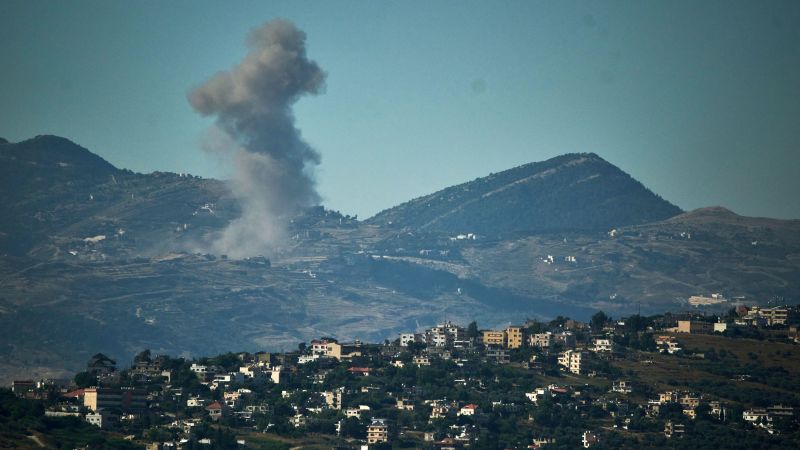
It is turning into another lethal day in southern Lebanon, with Lebanese Civil Defense confirming that Israeli air strikes have killed 16 people on Saturday. The sudden surge in regional violence threatens to destabilise the fragile US-Iran agreement aimed at ending active hostilities and permanently reopening the vital Strait of Hormuz shipping lane.
With a tentative Lebanon ceasefire scheduled to take effect late on Friday, the renewed bombardment in the Nabatieh area has raised international fears that the broader diplomatic peace process could completely unravel before formal technical talks even begin.

Nabatieh Strikes Devastate Hopes for Regional Stability
Citing “ongoing attacks” across the governorate, Civil Defense officials announced that emergency teams had successfully evacuated 47 citizens to safe locations. However, first responders also transferred 16 bodies and 12 severely injured people to local hospitals.
The latest casualties follow a devastating wave of military operations. The Israeli military killed at least 47 people in Lebanon on Friday, according to the Lebanese health ministry. The figures mark it out as the second deadliest day since hostilities between Israel and Hezbollah flared in early March.
While a fresh local truce was anticipated, the situation deteriorated rapidly overnight. An Israeli official claimed that Hezbollah fighters launched dozens of projectiles at Israeli ground troops positioned inside Lebanese territory. This cross-border exchange prompted immediate retaliatory air strikes from the Israeli Air Force, rendering the scheduled truce inert.
Why the US-Iran Agreement Hinges on the Subdivided Borders of Lebanon
The central paradox of the current diplomatic crisis is that the 800-word, 14-point memorandum of understanding makes Lebanon a central part of the ceasefire agreement, despite the country having no say over its contents.
While the leaked framework document explicitly mentions the duty of the primary signatories to restrain “their allies,” it does not openly name Israel or Iran’s proxy militant group Hezbollah. This omission is highly significant for the future of the Middle East. Even though the US government launched the war on Iran in tandem with Israel, Israel’s military action in Lebanon against Hezbollah has complicated efforts to reach this peace deal, so the Jewish state’s cooperation — or desire to be a spoiler — will be a key factor.
The fragility of the wider peace tracking was underscored yesterday when the Israeli military killed at least 47 people in Lebanon, according to the country’s health ministry, making it the second deadliest day since hostilities between Israel and Hezbollah flared in early March. The IDF stated that these heavy strikes came after four Israeli soldiers were killed in a targeted Hezbollah attack.
Diplomatic Fallout: Swiss Peace Talks Plunged into Doubt
The escalating violence on the ground has immediately choked diplomatic channels in Europe. Planned US-Iran talks in Switzerland were also postponed yesterday following the Israeli strikes, before US envoy Steve Witkoff set off for Switzerland today.
International mediators from Qatar and Pakistan are working to rescue the diplomatic framework. However, Tehran is holding a firm line on the immediate halt to border operations before continuing technical sessions. Iran had asked for guarantees that hostilities in Lebanon would end before it resumed the talks, a diplomat told CNN.
With billions in frozen assets and global oil transit corridors at stake, the coming hours in southern Lebanon will decide if international diplomacy can override local warfare.