

An extraordinary breakthrough has put Aramoko-Ekiti firmly in the spotlight as researchers physically locate a potential heritage-tourism treasure. What started as unusual remote-sensing patterns identified from space has now been confirmed on the ground.
A field team led by archaeologists from the Museum of West African Art (MOWAA) teamed up with the Ekiti State Bureau of Tourism Development to confirm that these mysterious satellite markings are very real.

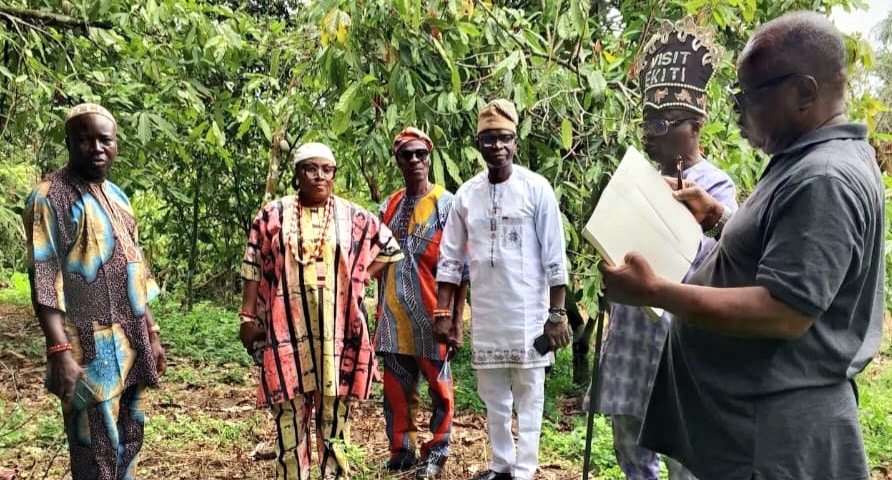
Guided directly by local traditional leaders, the expert delegation carried out essential archaeological ground-truthing across the terrain. They observed clear physical landscape features matching the digital space images, opening up an exciting new chapter for heritage conservation in the region.
MOWAA Experts Confirm Physical Earthworks in Aramoko-Ekiti
Before stepping into the field, the survey team paid a courtesy visit to the Ekiti State Commissioner for Arts, Culture and Creative Economy, Prof. Rasaki Ojo Bakare, an Aramoko-Ekiti native. Expressing genuine delight, Prof. Bakare praised the proactive project, noting that the ancient town holds vast cultural wealth that has remained hidden from the world.
”The ancient town possesses numerous cultural and heritage assets that have remained largely undocumented and insufficiently exposed,” Bakare explained, emphasising that professional intervention will help document and protect these historical assets for generations to come.
The team then moved to the kingdom itself, receiving a warm welcome from Regent Sherifat Owolabi Adeyemi alongside traditional chiefs. The experts conducted a detailed one-hour dialogue with the traditional council, detailing how space technology works alongside oral tradition and community memory.
Regent Leads Crucial Archaeological Ground-Truthing Field Work
The defining moment came when Regent Sherifat Owolabi Adeyemi personally led the experts and the Director-General of the Ekiti State Bureau of Tourism Development, Wale Ojo-Lanre, Esq., to the precise mapped locations. Standing on the historic soil, experts verified that the satellite signatures were not computer glitches or digital artifacts, but actual man-made physical earthworks.
Researchers noted that these physical structures could be ancient defensive moats, historic settlement borders, or early agricultural earthworks. However, they stressed that careful scientific testing is required before reaching a final conclusion.
Dr. Opajide Segun and Mr. A. Uranta Opuada of MOWAA, alongside Mr. Bamidele Joseph of the Ekiti Biodiversity Survey Project, commended Ojo-Lanre for moving swiftly from satellite data to physical discovery. They pointed out that without quick official backing, invaluable cultural sites often disappear unrecorded.
Building a Bright Future for Tourism in Aramoko-Ekiti
Speaking on the discovery, Wale Ojo-Lanre urged measured enthusiasm while celebrating the tangible results:
“What makes today particularly exciting is that something first observed through satellite mapping has now been physically located on the ground. That gives our archaeologists a tangible landscape to investigate further.”
“We must not run ahead of science by making conclusions about its exact age or historical purpose at this stage. Let the professionals do their work.”
“But there is every reason for Ekiti to be happy that another potentially significant and previously untapped heritage resource has been identified within our State.”
Ojo-Lanre noted that modern travel extends beyond hotel resorts or natural waterfalls. Ancient earthworks, historic landscapes, and oral histories create rich opportunities for academic research, student excursions, and cultural travel. If further digs confirm the site’s importance, local residents stand to gain fresh economic opportunities through local guiding, transport, hospitality, and artisan crafts.
This ambitious drive aligns directly with the heritage vision of Governor Biodun Abayomi Oyebanji, who continues to encourage the discovery and protection of local history. For the people living in Aramoko-Ekiti, this ground discovery marks an inspiring moment, proving that some of the greatest historic treasures of the state still lie waiting just beneath the surface.