

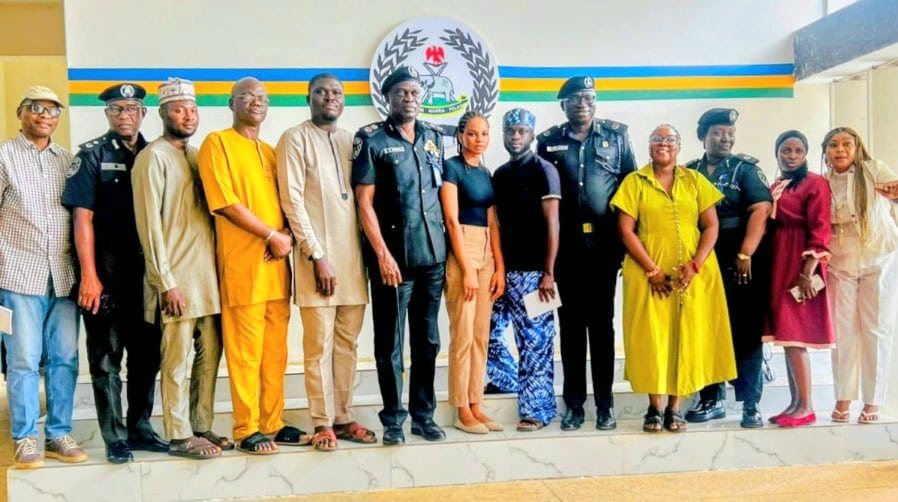
The Oyo State Police Command has reaffirmed its unyielding stance against sexual violence, warning that out-of-court settlements and delayed medical evidence continue to sabotage legal justice for victims.
Speaking during a courtesy visit by the dedicated Ending Sexual and Gender-Based Violence (ESGBV) Media Corps at the Police Headquarters in Eleyele on Monday, September 14, 2026, the 49th Commissioner of Police for Oyo State, CP Abimbola Ayodeji Oluwagbenga (psc, mnips), declared that the command will accept no compromise in holding perpetrators accountable.
“Advocacy is the carrot, prosecution is the key,” CP Ayodeji emphasized, outlining the command’s strategic roadmap to eradicate sexual assault, abuse, and human trafficking across Oyo State.
Strengthening SGBV Prosecution and Police Gender Desks
Addressing the media delegation, CP Ayodeji highlighted the critical role of specialized police units in delivering swift, survivor-centered responses. Trained female officers currently head designated Gender Desks across police commands and divisions statewide to ensure that victims receive empathetic, confidential handling from the moment an assault is reported.
However, the Commissioner identified severe structural obstacles that continue to stall the successful prosecution of Sexual and Gender-Based Violence (SGBV) cases:
- Forensic and Medical Barriers: The high cost of medical examinations and delays in securing forensic evidence often leave prosecutors without the scientific proof required in court. Much like murder investigations without timely autopsies, SGBV cases risk closure if medical evidence is not documented immediately.
- Logistical and Financial Constraints: Both law enforcement operations and victims’ families face severe funding gaps. Struggling families frequently buckle under the financial weight of hospital bills and legal processes.
- Cultural Pressures and Impunity: Out-of-court financial settlements and familial cover-ups remain major barriers. CP Ayodeji strongly condemned these practices, warning that cases involving child trafficking, defilement, and rape must never be treated lightly or settled privately.
Ethical Media Coverage: Ending Stigma and Sensationalism
CP Ayodeji issued a strong charge to journalists, stressing that responsible reporting is indispensable to winning the war against gender-based crimes. He urged media practitioners to verify and investigate all facts before publishing, avoiding sensationalized headlines that glorify abusers while inflicting secondary trauma on survivors.
“If you don’t understand how we operate, you will take us to the slaughterhouse,” CP Ayodeji noted, urging news outlets to learn the operational frameworks of law enforcement to prevent misinformation and foster constructive partnerships.
To align media coverage with fundamental human rights principles, the Commissioner urged reporters to:
- Protect the identity, confidentiality, and dignity of survivors through informed consent.
- Dismantle harmful societal stereotypes that encourage victim-blaming and silence.
- Collaborate directly with First Responders, the International Federation of Women Lawyers (FIDA), Civil Society Organizations (CSOs), and healthcare professionals.
Collaborative Action Against Child Trafficking
Highlighting recent operational achievements despite limited resources, the Command revealed that police interventions recently recovered 17 children linked to a trafficking syndicate. Among those rescued was a nine-day-old infant successfully reunited with her biological mother after being falsely declared dead by traffickers.
Speaking on behalf of the ESGBV Media Corps, team lead Henry Odey commended CP Ayodeji for promoting transparency and open dialogue with the press. Odey highlighted ongoing interventions by the National Agency for the Prohibition of Trafficking in Persons (NAPTIP), supported by the European Union and International IDEA, aimed at curbing human trafficking and lowering SGBV prevalence across Oyo State.
The Media Corps called for deeper operational ties between journalists and the police command—ensuring that while survivors receive protection and institutional support, offenders face the full weight of the law.