

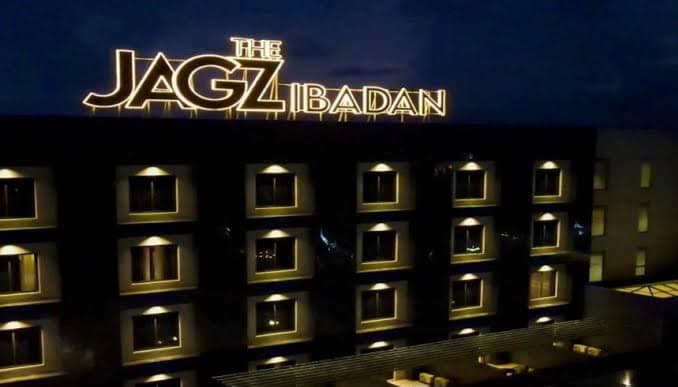
The Jagz Hotel sits proudly on the Iyaganku GRA axis of Ibadan, a striking hospitality landmark that both dazzles the eye and begs to be cherished. From the street, the building reads like a statement: distinctive, visible and hard to ignore. As a tourism journalist and hospitality promoter who followed the site long before it became a hotel, I have watched its rise with affection and expectation.
That affection has history. When I served as Chairman of the Nigeria Union of Journalists, Oyo State Council, the roughly one-acre plot was underused. At one time an itinerant policeman occupied it; at other times it attracted undesirable loitering. So when a solid, productive structure began to rise there, I felt genuine delight. When it opened as the Jagz Hotel Ibadan, the city gained a new architectural asset.
My curiosity as to whether it would match global exemplars of hospitality remained. I have experienced the Burj Al Arab in Dubai, the Emperor’s Palace in Johannesburg, hotels in Sweden, the old Nicon Noga Hilton in Abuja, Eko Hotels & Suites in Lagos, and Hyatts abroad. Would The JAGZ HOTEL offer something different? Family circumstances in September 2026 provided the answer when I spent two nights there.
First impressions do count. Arriving at about 11 p.m., I found security professional and reassuring. The reception area impressed: lighting, furniture, fittings and ambience announced serious investment. The owners did not build with leftovers. Money, thought and expertise went into that property.
The front desk, however, gave a different note. The reception staff seemed fatigued, and my initial welcome lacked warmth. I gave them the benefit of the doubt. A courteous male staff member later assisted us with the lift; his kindness to my granddaughter was consistent throughout our stay and reflected well on the hotel.
The room itself was beautiful. Fixtures and fittings showed professional handling; space and conveniences were well apportioned. I slept so soundly my snoring disturbed my granddaughter — one practical measure of comfort.
Then came breakfast — and here The JAGZ HOTEL excelled. The restaurant offering was impressive, but the restaurant team was the real highlight: attentive, courteous, responsive, caring and professional. The difference between serving food and delivering hospitality was plain. Whoever manages that restaurant deserves praise. I will remember the Jagz Restaurant not merely for its menu but for the human engagement that accompanied it. Excellent food. Exceptional service.
Checkout revealed the deeper worry. At about 10:15 a.m. I called for a porter; nobody came for thirty minutes. A lady from the reception then abruptly ended a phone call while I was still explaining. When I went down, the front desk interaction was cold and defensive rather than conciliatory. I calmly requested a supervisor. Earlier that morning I had overheard other guests express similar frustrations about the reception staff. This pattern should alarm management.
Many owners think their biggest investments are marble, chandeliers or electronics. They are mistaken. One of the most expensive slices of hotel real estate is the few metres occupied by the front desk. That space creates first impressions, resolves or aggravates complaints, and wins or loses repeat business in minutes. The person behind the counter is the First Impression Manager, Complaint Manager, Reputation Manager and sometimes the Last Impression Manager.
I recall the old Abuja Sheraton, where approaching reception was part of the hospitality experience. At Eko Hotels & Suites, Lagos, guest-facing personnel are clearly prioritised. At a hotel in Jacksonville, Florida, I encountered “First Impression Managers”—a simple, instructive philosophy.
This is not condemnation. The JAGZ HOTEL, Ibadan, is one of the most impressive hospitality properties I have seen in South-West Nigeria. It is beautiful and elegant; its rooms are excellent, and its restaurant service is outstanding. The owners invested heavily and created an asset Ibadan should be proud of.
But hospitality is a feeling, not architecture. You can install Italian marble and the finest mattresses, yet if the people who receive guests make them feel unwanted, the gold will lose its shine. Hospitality businesses in Nigeria often fail not for lack of grandeur but for lapses in maintenance, staff motivation, training and guest listening. A magnificent building may bring a guest in once; service determines whether they return. In the age of social media, one unhappy guest can broadcast a poor encounter far and fast.
Management must act. Review Front Desk operations urgently: staff training, supervision, shift patterns, response times, complaint handling, telephone etiquette, porter coordination and, above all, a culture of warmth. Use mystery guests periodically. Analyse complaints, not merely file them. Recognise and reward outstanding staff; correct persistent poor attitudes decisively. The restaurant proves The JAGZ HOTEL can deliver human-centred service — that standard must extend to reception and all guest-contact points. Hospitality begins before a guest enters the room and ends only when they drive away.
I love The JAGZ HOTEL. I admired its transformation from an underutilised parcel of land into a magnificent structure. After my stay, my admiration grew. That is why I warn: please, don’t let poor Front desk service ruin The JAGZ HOTEL, Ibadan. The building deserves better. The investment deserves better. Ibadan hospitality deserves better. And the guest deserves better.