
Calls for FIFA leadership change are gathering momentum after a group of prominent current and former footballers publicly criticised the governing body’s decision-making and demanded a greater voice for players and supporters.
Former Manchester United defender Mikaël Silvestre shared a statement on X on Monday that was later recirculated by England international Lucy Bronze and former England goalkeeper David James. Arsenal great Emmanuel Petit, Didier Drogba and Robert Pires were also reported to have backed the message.
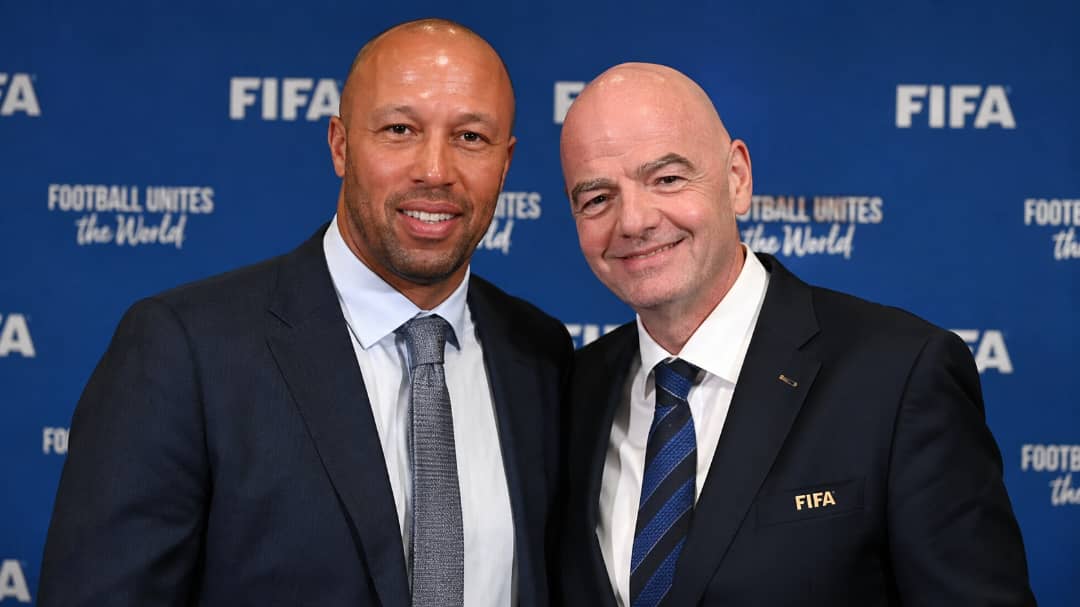
The intervention arrives at a tense moment for FIFA president Gianni Infantino, who has faced mounting scrutiny over governance and plans involving potential private investment in the World Cup.
FIFA leadership change demand puts players at center of reform debate
Silvestre, a member of FIFA’s Player Voice Panel, shared a statement arguing that football’s biggest stakeholders have been excluded from major decisions affecting the sport.
“For too long we’ve seen major decisions taken without players being consulted or considered, and without any regard for the fans who sustain the sport,” said the statement shared by Silvestre, who is a member of FIFA’s Player Voice Panel.
The criticism went beyond a single proposal, presenting the dispute as a broader question about who holds influence over football’s future.
“Change is necessary. Power has blurred the current leadership’s ability to distinguish between its own interests and what is best for football. Enough is enough.
“There are good people within FIFA who want to rebuild trust, but a new era requires a structured change: a real, direct say for players and fans in how football is run. Those who step on to the pitch and those who sit in the stands deserve a genuine voice to help reshape football’s future together, ” it added.
According to ongoing football governance analysis by Reporters At Large, the central issue is increasingly one of representation: whether players and fans should have a more direct role in decisions involving football’s major commercial and competitive properties.
Gianni Infantino faces growing FIFA reform pressure
Infantino has led FIFA since 2016 and is now confronting increased pressure following plans to sell stakes connected to the World Cup to private investors. The proposals were expected to raise as much as $20 billion.
The players’ statement did not name Infantino directly, but its release followed criticism from global players’ organisation FIFPRO, which described the proposed move as a “profound abuse of presidential power.”
That is not merely a governance failure. It is a profound abuse of presidential power,” a statement said at the time.
“The withdrawal of [the planned proposal of] FFE prevented an irreversible decision. It did not restore the confidence that made such a proposal possible in the first place. That confidence has now been fundamentally broken.
“It cannot be rebuilt through carefully drafted statements, internal reviews or promises to improve processes. Nor can it be restored simply by announcing governance and structural reforms that should always have existed.”
The language from players and their representatives has sharpened the debate ahead of FIFA’s next presidential election, scheduled for March.
Could Gianni Infantino lose support before the FIFA election?
UEFA president Aleksander Čeferin has also suggested Infantino could ultimately conclude that his support has weakened across football.
“Every day, there are different discussions. I didn’t speak with him. But there are two options,” Čeferin said on “The Rest is Politics” podcast.
“One option is that he realises that he doesn’t have the support, and that’s not only the political support of the ones who vote, but the political support of the football community, the political support of fans, the political support of the players, former players, and coaches.
“And the second option is that he goes to the elections in March, but in that case, I think he will have a candidate against him. I don’t know yet who.”
Infantino has also received support, however, with Samuel Eto’o arguing that the proposed plans could have helped African football.
“I don’t think that President Gianni Infantino was wrong,” he said in an interview with CNN Sports. “I think all these things are happening because of the timing.
“There’s an election coming up where Gianni Infantino is standing. All of this has happened because there is an election coming up. That’s all there is.
“[The proposal] is even very good for the African nations, because it would allow us — should allow us if it went all the way through — to truly compete with the big nations,” he said.
With former players, current internationals, FIFPRO and UEFA figures now publicly engaged, the March election looms as the next major test in a dispute that has placed FIFA’s governance, commercial ambitions and political support under an increasingly intense spotlight.