
“The first duty of power is not to appear strong, but to be truthful about uncertainty”- Hannah Arendt
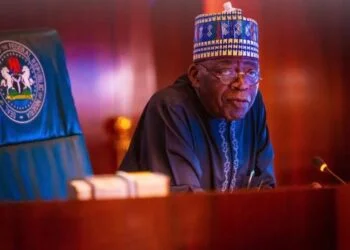
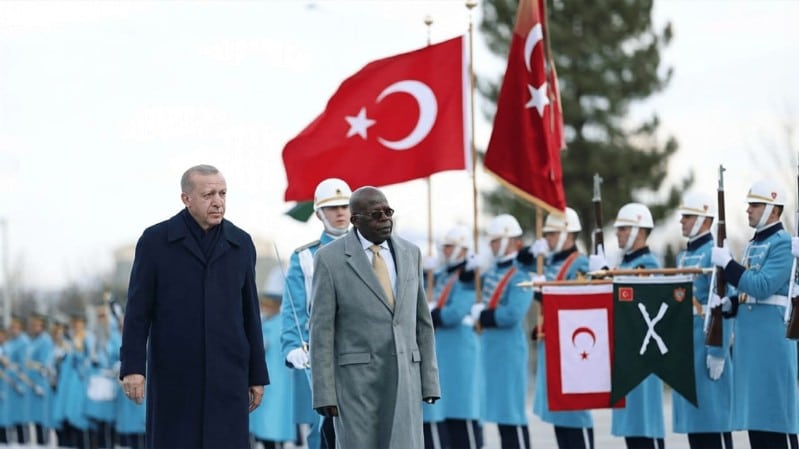
President Bola Ahmed Tinubu’s brief loss of footing during an official engagement in Turkey should ordinarily have passed without consequence. Public officers, like all humans, are not immune to momentary slips. In most political environments, such an incident would barely merit comment.
In Nigeria, however, it did not. And perhaps it could not.

What transformed a minor physical incident into a sustained national conversation was not the stumble itself, but the official response that followed. Explanations came swiftly and insistently. Nigerians were told the President stepped on an object. There was no health concern. The surface was poorly laid. The matter was closed.
Instead of settling the issue, the explanations widened it.
The problem was not optics. It was trust.
In societies where confidence in public institutions is strong, citizens rarely interrogate the physical condition of leaders beyond what is formally communicated. In Nigeria, confidence remains fragile. That fragility is not the creation of one administration; it is the inheritance of years of selective transparency and institutional weakening.
Presidential health, whether comfortable or not, is not a private matter. It is a governance issue. This is not voyeurism. It is public interest. Mature democracies recognise this reality and manage it through structured disclosure and professional restraint. Where such systems are unclear, speculation becomes inevitable.
This is why many Nigerians quietly asked questions that were never directly addressed. Is there a formally designated personal physician attached to the President of the Federal Republic of Nigeria. If so, why was reassurance delivered almost entirely through political spokesmen rather than calm medical authority.
Health management at the highest level of state should be anticipatory and institutional, not reactive and political. When communication appears improvised, reassurance weakens rather than strengthens.
Beyond communication, the Turkey incident reopened a deeper national discomfort. The condition of Nigeria’s healthcare system itself.
For decades, successive governments have presided over the steady decline of public healthcare while top officials routinely seek medical care abroad. Hospitals struggle. Professionals emigrate. Citizens adapt to scarcity. Against this backdrop, any health related incident involving national leadership outside the country resonates beyond the personal.
The concern is not hostility. It is contradiction.
An equally instructive episode was the attempt to explain a related protocol controversy by blaming a badly laid red carpet. The explanation missed the point. A carpet is fabric. Protocol is meaning. Confusing the two reflects a deeper problem of communication culture, where optics management is mistaken for clarity.
The problem was never the carpet. It was the framework of explanation.
More broadly, the incident illustrated a recurring governance weakness. An over investment in damage control and an under investment in confident, forward looking communication. The Turkey visit had economic and diplomatic dimensions deserving attention, yet these were eclipsed by reactive narrative management.
Leadership communication works best when it is calm enough to be brief and confident enough to move on.
Nigerians bring memory to such moments. Past experiences of opaque explanations and prolonged silences inform public reaction. Public caution in this context is not subversion. It is learned vigilance.
Nations are not judged by whether leaders stumble. They are judged by whether institutions are strong and honest enough to absorb human moments without confusion or defensiveness.
Postscript: Coup Allegations and the Cost of Speaking Too Early
Those institutional questions find a more serious echo in the interim investigation report on the alleged coup plot against President Bola Ahmed Tinubu, as extensively reported by The Punch last Tuesday. That report moved the matter from speculation into grave national concern and demands scrutiny not only of the alleged conspiracy, but of how Nigeria’s military institutions handled unfolding intelligence.
The gravity of a coup allegation in a constitutional democracy cannot be overstated. Equally serious is the manner in which institutions respond while facts are still being established.
When reports first emerged in October 2025 that several military officers had been arrested for plotting to overthrow the government, the Defence Headquarters issued a swift and categorical denial. Nigerians were told the arrests were purely internal disciplinary matters and had no connection to any coup attempt. That position was asserted publicly while intelligence gathering and analysis were still ongoing.
Subsequent developments have complicated that assurance. The interim findings later acknowledged by military authorities describe conduct far beyond routine indiscipline. If accurate, they point to early stage operational planning for a coup involving personnel across the Army, Navy and Air Force, with the highest levels of government identified as targets.
This contradiction raises a fundamental institutional question. Why was certainty projected before intelligence processes had run their full course.
In professional intelligence practice, preliminary information is provisional. Signals are assessed, verified and refined before conclusions are drawn. Public communication is expected to reflect this uncertainty. Definitive denial at an early stage is therefore structurally unsound. When later findings appear to validate what was previously dismissed, institutional credibility suffers.
The concern is not that the military acted. Preventive action against potential threats is legitimate. The concern is that communication appeared driven more by reassurance than by discipline.
The report also invites scrutiny of the logic of the alleged plot. According to the findings, the conspiracy was coordinated by a serving Army Colonel reportedly aggrieved by repeated promotion failures. While professional frustration has historically featured in cases of military dissent, it is insufficient to explain an operation involving multiple services, surveillance of strategic installations, infiltration of civilian contractors, encrypted communications and the movement of substantial funds.
Either the motivation has been oversimplified for public explanation, or deeper institutional weaknesses remain insufficiently examined.
This distinction matters. Narrow diagnosis produces narrow solutions. If broader issues of morale, promotion transparency, internal intelligence oversight or ideological drift are involved, institutional reform must be equally broad.
There are also concerns about evidentiary presentation. References to charms, handwritten notes and assorted documents may have investigative relevance, but they must be handled with restraint in public discourse. Intelligence findings must withstand judicial scrutiny. Symbolism must not substitute for proof.
Equally troubling is the premature introduction of ethnic descriptors. Coups are institutional failures, not ethnic enterprises. Introducing regional identifiers before judicial determination risks politicising a security matter and undermining cohesion.
Beyond the alleged plot itself, this episode exposes a recurring dilemma in Nigeria’s civil military relations. The tension between image management and institutional truth persists. Reputation is best preserved through consistency and process, not premature denial.
A more measured initial response would have acknowledged the arrests, confirmed investigations and committed to transparency upon conclusion. That approach would have preserved credibility regardless of outcome. Speaking too early created the impression of an institution correcting itself in public.
If the alleged plan was indeed violent, with senior officials marked for elimination, then the matter demands the highest evidentiary standard and the most disciplined communication. Swift action may have been necessary. Swift conclusions were not.
Ultimately, the strength of a democracy is measured not only by its ability to withstand threats, but by the discipline with which its institutions respond to uncertainty. Intelligence matures in stages. Public trust depends on respecting that process.
Nigeria’s Armed Forces remain central to the stability of the republic. Preserving that role requires more than operational effectiveness. It requires communication that is measured, truthful and consistent from beginning to end. When institutions speak with care, even in moments of danger, they strengthen both their authority and the democracy they are sworn to defend.
Ogundipe, a Public Analyst, Former President Nigeria and Africa Union of Journalists writes from Abuja.
January 30, 2026.