

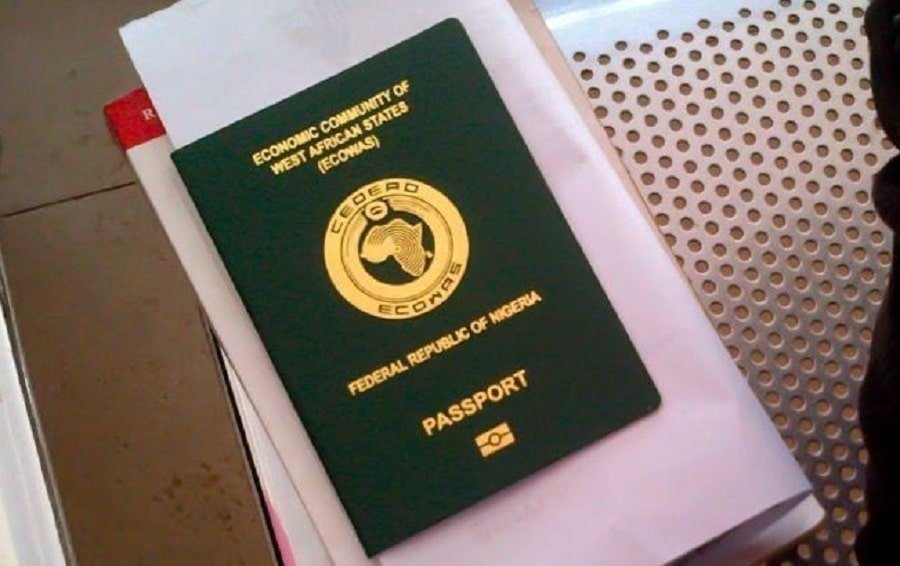
Nigerian passport holders can access 44 destinations visa-free following the latest global mobility ranking by Henley and Partners.
The July 2026 edition of the Henley Passport Index placed Nigeria 90th globally. The country dropped one spot from 89th in April 2026, even though its overall visa-free score remained unchanged.

The data shows a persistent mobility gap for Africa’s most populous nation. While top-ranked passports grant entry to over 190 territories without prior approval, Nigerian citizens face strict entry requirements across 75 per cent of the globe.
Entry regulations vary significantly across the listed destinations. Certain nations offer complete visa-free entry, whilst others require a visa on arrival or an electronic visa prior to embarkation.

The current allocation of 44 destinations includes major regional partners within West Africa, alongside scattered territories in Oceania, the Caribbean, and Asia.
Unrestricted and Visa-On-Arrival Destinations
Nigerian travellers retain unrestricted entry or access through simplified entry procedures across the following locations:
Africa: Benin, Burkina Faso, Burundi (visa on arrival), Cameroon, Cape Verde Islands, Chad, Comoro Islands (visa on arrival), Côte d’Ivoire, Djibouti, Ghana, Guinea, Guinea-Bissau, Kenya, Liberia, Madagascar (visa on arrival), Mali, Mauritius, Mozambique, Niger, Rwanda, Senegal, Seychelles, Sierra Leone, The Gambia, Togo.
Americas & Caribbean: Barbados, Dominica, Haiti, Montserrat, St. Kitts and Nevis.
Asia & Middle East: Cambodia (visa on arrival), Iran (visa on arrival), Lebanon, Maldives (visa on arrival), Timor-Leste (visa on arrival).
Oceania: Cook Islands, Fiji, Kiribati, Micronesia, Niue (visa on arrival), Palau Islands (visa on arrival), Samoa (visa on arrival), Tuvalu, Vanuatu.
Travel authorities advise all prospective travellers to confirm exact immigration protocols with foreign embassies, as entry conditions can change without notice.
Global Mobility Gap: Why Nigerian Passport Visa Free Countries Remain Limited
The decline in ranking underlines structural challenges facing Nigerian travellers in international commerce and aviation.
According to figures from the International Air Transport Association, passport rankings reflect diplomatic ties, security perception, and economic reciprocity. While Nigeria has built stronger mobility through West African trade agreements, major economies in Europe, North America, and Asia maintain rigid border rules.
The static global mobility score highlights how difficult it is for developing economies to secure visa waivers. Despite introduction of enhanced biometric e-passports, international trust remains tied to economic stability and border controls.
“Travellers are advised to confirm the latest immigration requirements with the relevant authorities before making travel plans,” states the official advisory from travel intelligence analysts.
Regional Disparity Across African Economies
The latest survey exposes a widening divide within the African continent itself.
Smaller nations such as Seychelles and Mauritius sit at the top of the continent’s standings. Seychelles holds the highest score in Africa, granting its citizens access to over 150 destinations without a pre-arranged visa.
In contrast, Nigeria continues to lag behind regional peers like Ghana and Senegal. Both countries secure higher positions through broader bilateral arrangements across South America and Asia.
This disparity creates practical obstacles for Nigerian businesses. Executives encounter prolonged visa processing times, high application costs, and frequent travel delays when competing in overseas markets.
International travel analysts note that without reciprocal diplomatic pacts, the number of destinations open to Nigerians will likely remain constrained.
The latest data from the Henley & Partners passport data confirms that while Nigeria has moved up from its 103rd position in 2021, real-world freedom of movement has stagnated.
Business leaders now urge government ministers to prioritise bilateral mobility negotiations. They argue that reducing diplomatic mobility hurdles is essential for unlocking trade under the African Continental Free Trade Area.