

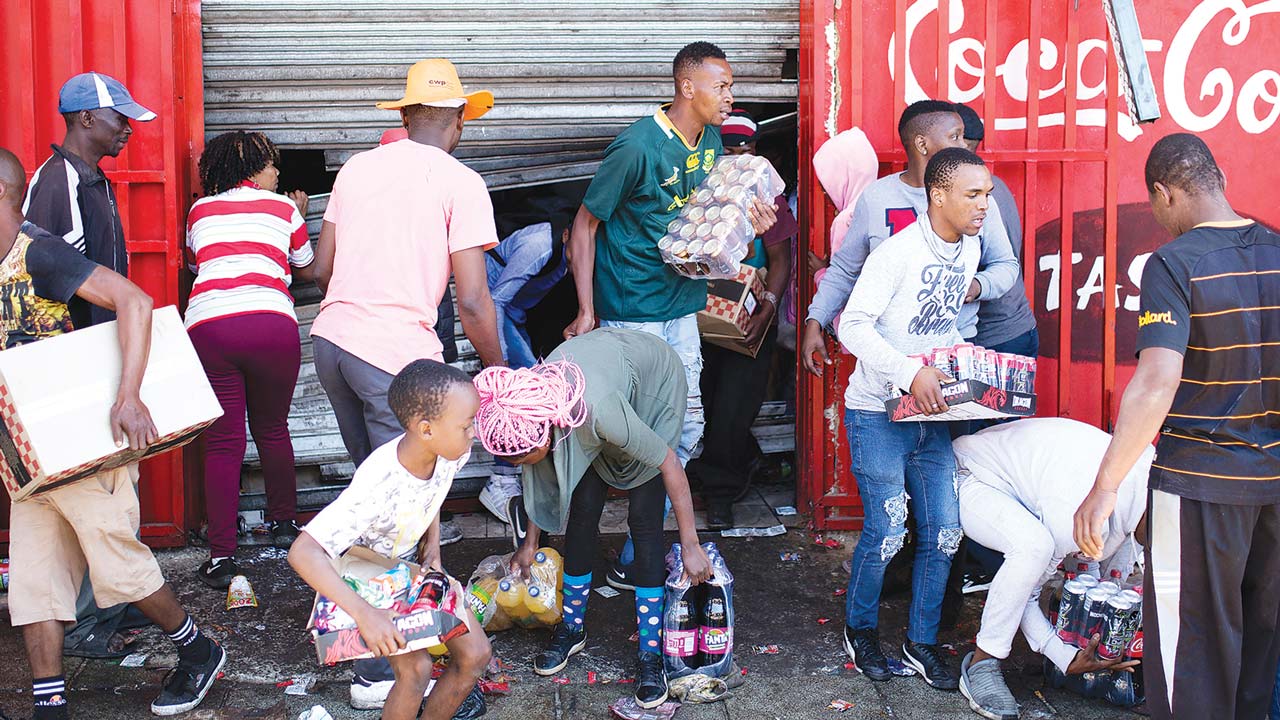
Crisis creates new words. Many are now insisting that what is happening in South Africa is not xenophobia (the fear of other people) but specifically, Afrophobia (the fear of other Africans, especially blacks). Some friends in Nigeria and South Africa have contacted me to write on this subject, which I was very reluctant to do. I lived in South Africa and like many Africans who went to that country after Apartheid, I tried my best to help the country. I can easily destroy friendships if I say the wrong thing against South Africans, and I could be rejected by Nigerians if I do not condemn South Africa enough. It is like walking on a tight rope above a canyon. I lived in South Africa, as an academic, being among the first postdoctoral fellows in South Africa when I arrived in the country in 1999. I went to South Africa with the intention of spending a year or two and then returning to Australia, where I did my PhD or move on to North America or return to Nigeria whenever things settled after the infamous reign of Sani Abacha. This did not happen; one year ended up in nearly six, and I left South Africa as a Senior Lecturer from the prestigious University of KwaZulu-Natal, where today, I still hold the additional position of Adjunct Professor. Permit my digression but I think that this intro is important, to put things into perspective. I know South Africa, just as I know Nigeria.
Many Nigerians and other Africans would not know the origin of the problems confronting South African youths today. It is a complex situation. During Apartheid, South African blacks were mis-informed by their white oppressors that they were lucky to live in such a “developed” country; that the rest of their kin outside South Africa still lived on trees. Those were the dark days. We rarely saw South Africa on film (except when the white policemen killed our brothers and sisters). They did not see us on film, so they believed everything that was fed to them. Only men like Nelson Mandela, in his drive to free his country, came to Africa (that’s the rest of the continent). In his book, Long Walk to Freedom, Madiba wrote that he was awe-struck to fly in a plane piloted by a black African, when he left South Africa. West and East Africans were already doing anything that anyone else would do in the world when Mandela left South Africa, on his way to Ethiopia, through West Africa. This knowledge was not available to the rest of South Africa. Apartheid education simply prepared our brothers and sisters in Azania (I don’t like calling that country, South Africa, which is really a region!) were largely trained to be gardeners, cooks and clerks, while being assured that they were better than the rest of us.
The end of Apartheid and the subsequent freedom of South Africa in 1994 was an eye opener to blacks in that country. Black engineers, doctors and professors poured in, to fill the vacuum created by the departure of frightened whites, who thought that the blacks would pay them back. However, the good old Madiba declared love for all, irrespective of colour, creed or status. He had not forgotten his speech in the early 1960s as he was being led to jail – to fight and die (if need be) for the freedom of everyone. But back to my story. Black South Africans were awed by the skills of their brothers and sisters who poured into the country. These were not people coming down from trees, as the white man had informed them. To be honest, the friction was there from those early days but it had not matured into xenophobia. I supervised a particular Zulu student, who was abandoned by a white man because they had running problems. Many times, that student asked me when I would leave for Nigeria! I was mature enough to tell him what he wanted to hear. I must not fail to mention that it was his colleague, another Zulu student, who I met again about 3 years ago, who chided him and other people with his mindset. I cannot forget what Siyabonga told this ingrate. He made it clear (maybe) to him that African experts were in the country to help them and should not be disturbed. He asked the ingrate (Kwazi was his name, by the way) why his type do not harass white immigrants, some of whom were of no use to South Africa. Well, I am grateful to Siyabonga (which is what his name means in Zulu) but I can tell you, I did not leave South Africa because of Kwazi’s nuisance factor (I am sure he is leading one of the killer cells against foreigners now) but I left on my own volition because I wanted to get back to Australia. In my mind, I have always wanted to work in Africa, which is why I returned twice to Nigeria, after my MSc and then after my PhD overseas. When Nigeria did not offer a viable option, I was happy to be in South Africa, and now, I am happy to be in an “African country” outside the mother Continent.
Gee, I feel like stopping this because I seem to have completely lost my tangent. I can see that I have not completely forgotten my big project of a book on South Africa. Let me quickly get back to the topic. Azanians, your leaders need to wake up before you enter a trap from which you will not be able to extricate yourselves. I did not know that there would be a day when I would publicly commend Julius Malema, the Leader of the Economic Freedom Fighters, a political party in South Africa. I commend him for his vocal stand on the xenophobia being perpetrated by his countrymen and women. Most of the other leaders are in one way or the other justifying the killings. Not Julius. He puts the problems of South Africa squarely where they belong. Who took the lands? Who is refusing to share the lands? Who is employing cheap, illegal labour from neighbouring countries? Who is manufacturing the drugs that Africans sell and now consume in South Africa? Who is protecting the criminals in South Africa? Julius is showing that leadership does not only come through academic degrees. Leadership is a gift from God. No one can buy leadership. Zuma built a village (Nkandla) with dubious proceeds; Ramaphosa, his successor, is a multi-billionaire, from mining the South African commonwealth, but their national leadership clout is doubtful. Ramaphosa instigated the current wave of violence that is about to sink his country, with hate messages during the election campaigns. Other SADC members are turning against South Africa. West, East and Central Africa are turning. Does South Africa think they can stand alone without their brothers and sisters? The people who held them in bondage for decades are still there, controlling 90 % of the resources.
I would like to summarise and get back to my paid job, which I do, almost 24/7. It is 1.40 AM as I finalise this document. South Africa, millions of your kin have come into your land. The majority are there to help you. Your hospitals and universities will collapse if these people leave. Your rich people have set up lucrative businesses across the African continent. If the rest of Africa shuts down these businesses, you will have more pain. There are millions of good African professionals in your country, but remember that any land that has a lot of meat animals also contains snakes. Therefore, there are a few criminals among the foreigners too just like there are many of you involved in local crimes. If you do not manage the foreign criminals carefully, you are going to throw the baby out with the bath water, and it will not be easy for you. I would like the South African people to ask themselves the following questions:
- How many African migrants are criminals, compared to the professionals in your hospitals and universities?
- Can South African hospitals manage without the African migrants?
- Can South African universities manage without the African migrants?
- Can South African companies afford to lose their business in the rest of Africa?
- Who makes the drugs that Africans sell in South Africa?
- Why are the police not doing more against the criminals?
- Why is there such a strong demand for drugs in South Africa?
While you are still pondering these questions, let me advise my own people (the rest of Africa). Guys, Azanians are our own people. We helped to free them. We gave birth to them and so should help them to grow. A good parent or relative does not provide drugs to his/her siblings. As relatives, we should not drug the young Azanians and turn them into prostitutes. There is good money and there is bad money; the end does not justify the means.
Finally, I urge the South African Government, if they love their country to take the following steps, in the sequence that I have presented them:
- Clean the South African security services, particularly the Police. Most of the top officers are on the payroll of criminals, including the drug dealers. Nothing else will work unless this is done as a first step.
- Take a census of foreigners (not only the Africans) and identify those who have no legitimate business. Deport anyone who has no legitimate business, including those who may have invested unclean money.
- Address the problem of drug use by a huge segment of the South African society.
- Train the unemployed youth to get real jobs or create their own jobs. Providing cash handouts and houses is not enough. Teach them to farm and get into other businesses. I think it is time to really take back some of the excess land in the hands of some farmers but do not give the land to people who cannot farm; develop an apprenticeship system for people to learn and get into farming.
Long live Africa.
Prof Paul A. Iji – Dean, College of Agriculture, Fisheries and Forestry, Fiji National University; Author of Writing and publishing your research (hard and Kindle editions) and A guide for young Africans growing up overseas. CreateSpace/Amazon. Please feel free to share.