
The court of public opinion often tries an institution long before a legal court steps in. In this difficult arena, wild allegations travel faster than clear explanations. Sensational headlines easily overpower documentary facts, presenting basic questions as definitive verdicts. The North-West Development Commission recently faced this exact scenario following its routine Senate oversight hearing with the Committee on Regional Development.
Media reports focused heavily on queries about ₦943 million spent on board allowances. Outlets also highlighted the absence of executive directors and official engagements with regional governors. These stories quickly triggered intense public interest. Citizens have every right to ask how leaders manage state resources. Similarly, lawmakers hold a clear constitutional duty to scrutinise federal bodies. Accountability is not persecution. Oversight is not hostility.

However, a question raised during a legislative meeting is never immediate proof of wrongdoing. The committee did not convict the agency of alleged financial corruption. Lawmakers never established that anyone stole, diverted, or misallocated the money under review. The session was a standard administrative evaluation where lawmakers requested clarifications and officials provided them.
Investigating the Alleged Financial Corruption Headlines
The ₦943 million figure naturally grabs attention. It represents a massive amount of cash that officials must fully explain and document. Yet, a large number does not mean a fraudulent ledger.
Intelligent scrutiny requires objective questions rather than instant condemnation:
- What specific period did the expenditure cover?
- How many board members participated in these official functions?
- Which distinct components fell under “board allowances”?
- Did the approved budget capture these transactions?
- Did the payments match current government financial regulations?
Context and documentation alter the narrative entirely. The official clarification from the North-West Development Commission offers the public a complete picture. When an agency spends funds according to the law, the item is an authorised institutional cost, not theft.
Statutory Laws and Public Funds Accountability
The reported absence of executive directors also demands legal context. The North-West Development Commission operates as a statutory federal body. National legislation and presidential authority dictate its leadership structure. The governing board cannot appoint executives when the law reserves that power strictly for the President.
Therefore, blaming the agency for missing directors makes little sense. This vacancy creates minor administrative hurdles, but it does not constitute misconduct by management. It is an institutional gap that the proper appointing authority must fix. Furthermore, critics targeted official visits to state governors, labeling them as luxury tours. Yet, a regional agency cannot work effectively from isolated offices. The zone covers seven distinct states: Jigawa, Kaduna, Kano, Katsina, Kebbi, Sokoto, and Zamfara. Each area presents unique security threats, environmental issues, and infrastructure deficits.
To maintain public funds accountability, leaders must consult local actors. Without these vital meetings, the agency risks duplicating projects and wasting vital resources.
Why a Senate Oversight Hearing is Not a Verdict
The public must view legislative scrutiny as a normal democratic exercise. The lawmakers asked tough questions, the management team appeared, and officials presented records.
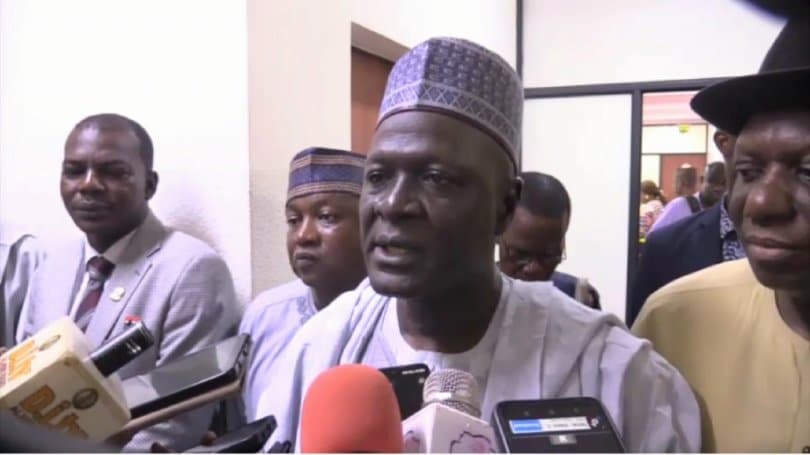
Crucially, the media omitted the actual conclusion of the meeting. Following the session, the Chairman of the Senate Committee, Senator Babangida Hussaini, shared a vital update during a press interview. He stated that:
“the Committee was satisfied with the processes undertaken by the North-West Development Commission so far and would continue to follow up on its activities.”
Why did early queries dominate the news while the Chairman’s satisfaction disappeared from the press? Fairness requires media channels to report both sides of an evaluation. The committee never declared the agency guilty of fraud.
Media Roles and the North-West Development Commission
Journalists have a duty to hold government bodies accountable. However, this obligation includes reporting answers with the same energy given to accusations. When editors bury answers, public perception warps.
There is a massive structural difference between reporting a legislative query and declaring an entity corrupt. The first records an administrative step; the second manufactures a false verdict.
The integrity of the North-West Development Commission will rest on finished projects, revived towns, and transparent books. The region needs this agency to drive economic recovery. Scrutiny should strengthen the body, not destroy it through hasty judgment. A question is not a conviction, and an allegation is not final proof.