

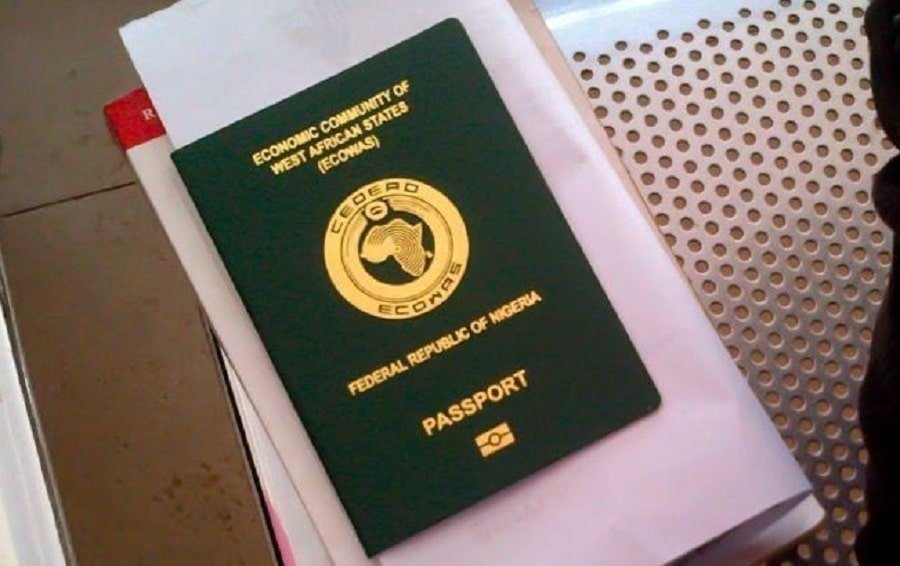
Nigeria dropped to 90th position in the latest global Nigerian passport ranking released on Tuesday. The July 2026 edition of the Henley Passport Index confirms Nigerian citizens retain visa-free access to just 44 international destinations.
The latest figure marks a single-place decline from the 89th position recorded in April 2026. While the overall global standing slipped, the total number of accessible destinations remained unchanged.
In an official release marking the 20th anniversary of the index, Henley & Partners stated that the publication “ranks passports based on the number of destinations their holders can access without obtaining a prior visa.”
The comprehensive assessment evaluated 199 national passports across 227 global travel destinations using verified flight data from the International Air Transport Association.
Nigeria currently shares 90th place alongside the Democratic Republic of the Congo and Turkmenistan. Each nation grants its citizens unhindered entry to 44 countries worldwide.
Economic Friction Drives Decline in Nigerian Passport Ranking
This latest downward movement underscores a structural mobility constraint for Africa’s most populous nation.
While passport rankings fluctuate due to shifting border policies, Nigeria’s static visa-free travel score reflects broader diplomatic hurdles. Over recent years, several African neighbours—including Zambia, Zimbabwe, Lesotho, Mauritania, São Tomé and Príncipe, and Somalia—withdrew visa-free entry or visa-on-arrival terms for Nigerian travellers.
Although gains in remote Pacific island nations provided numeric balance, regional access within Africa has narrowed.
For business leaders and entrepreneurs, limited mobility creates direct financial friction. Restrictive visa requirements slow commercial expansion, raise transaction overheads, and limit access to international capital markets.
The disparity is particularly stark within West Africa. Neighbouring Ghana holds the 70th position with access to 67 destinations, while Morocco sits in 67th place with 71.
South Africa maintains the continent’s strongest document, occupying 49th place globally with visa-free travel access to 101 countries.
Analysts note that passport strength often serves as a proxy for economic stability and diplomatic leverage. Countries with strong sovereign debt profiles and robust bilateral trade networks consistently secure broader reciprocal entry agreements.
Global Mobility Gaps Divide Developed and Emerging Economies
The broader index reveals a widening mobility gap between wealthy economies and developing nations.
Singapore retains the world’s most powerful passport, offering visa-free travel access to 192 destinations. Japan follows closely in second place with 188, while South Korea and the United Arab Emirates share third position with 187.
The United States occupies 10th place globally, granting access to 180 destinations.
At the bottom of the table, Afghanistan remains the least powerful passport with entry to just 22 destinations. Syria ranks 103rd with access to 25 countries, while Iraq sits in 102nd position with 28.
Nigeria’s recent trajectory highlights the complex nature of passport rankings. Between January 2024 and April 2026, Nigeria rose six places from 95th to 89th. Yet that rise occurred even as its actual visa-free travel count dropped from 45 to 44 destinations.
Relative index improvements frequently stem from sharper declines in competing states rather than tangible policy breakthroughs.
Until bilateral diplomatic engagements secure expanded reciprocal agreements, Nigerian travellers will continue to navigate significant international entry barriers.