
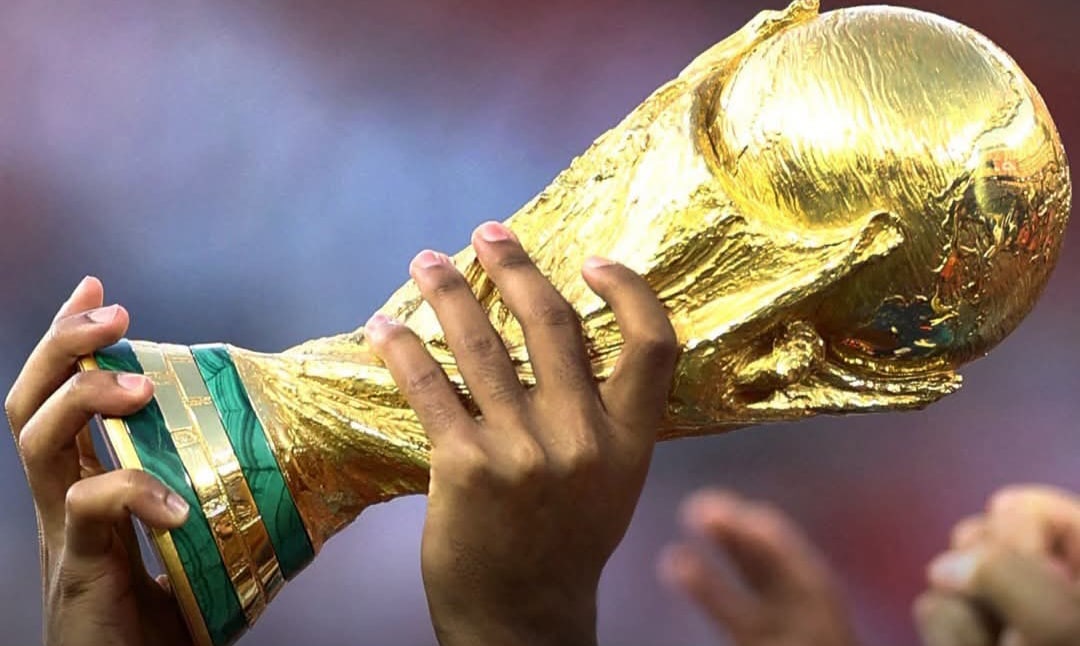
All 55 European nations have voted unanimously to boycott all FIFA competitions if world football’s governing body sells tournament stakes to private investors.
The historic resolution, passed during an emergency virtual assembly, represents an unprecedented rebellion by European nations against Zurich’s leadership. The boycott applies directly to all international tournaments under FIFA’s banner, encompassing both the men’s and women’s World Cups alongside the newly expanded Club World Cup.
At the centre of the dispute is an ultimatum issued by FIFA president Gianni Infantino. Under his proposal, member federations receive a $40m (£30m) payout—including an upfront $20m payment requiring approval by 19 September—in exchange for surrendering commercial assets to a new subsidiary, Fifa Forward Enterprise (FFE).
American venture capital firm Thrive Eternal, founded by Joshua Kushner, is well-positioned to lead the investment group acquiring a 20 per cent stake in the $20bn venture.
Resistance among European nations escalated rapidly during Thursday’s summit. Senior administrators, including Football Association chairwoman Debbie Hewitt and chief executive Mark Bullingham, voiced uncompromising opposition. Hewitt, despite serving as one of eight official FIFA vice presidents, had received no prior briefing regarding Infantino’s private negotiations.
In a collective statement issued after the summit, the 55 member federations firmly rejected the commercialisation of international sport.
“The World Cup cannot be treated as an investment product,” the statement read. It is one of football’s greatest sporting legacies. It has been built over generations by players, national teams and supporters across every continent. No part of it should ever be surrendered to private investors. The World Cup is not for sale.”
The statement further condemned the secret negotiation of the deal, describing the financial deadline as an act of intimidation.
“This is not merely a profound failure of leadership but an abdication of FIFA’s duty as the custodian of world football,” UEFA stated. “National associations around the world are now presented with an ultimatum: accept the irreversible capture of football’s greatest competitions or bear the consequences. This is not a ‘democratic decision,’ but governance by intimidation—an act of coercion unworthy of an institution entrusted with the stewardship of the global game.”
The boycott threat faces an immediate practical test in October, when qualifying play-offs for the Women’s World Cup are scheduled to take place.
How European Nations Are Resisting the Fifa Private Investment Plan
The unified stance by European nations represents the most significant structural rift in sports administration since the collapse of the European Super League in 2021. By attempting to monetise tournament rights through external venture capital, Infantino’s initiative threatens to shift decision-making power from nonprofit member federations to private financial entities.
Although European nations account for just 55 of Fifa’s 211 voting members, their competitive and financial weight dominates global football. European teams comprised six of the eight quarter-finalists at the most recent men’s World Cup, and countries from the continent have won 13 of the 23 world titles held since 1930. A World Cup held without the participation of major European nations would shatter the competition’s commercial value and athletic prestige.
UEFA vice president Laura McAllister emphasised the geopolitical reality during an interview following the vote.
I feel optimistic they won’t, because the reality is the powerhouse of world football is Europe,” McAllister stated, adding that the proposals pose a “genuine existential threat to the game.
Political leaders across the United Kingdom backed the decision made by European nations. Culture Secretary Lisa Nandy offered explicit government support for the boycott.
“This is a principled decision that we strongly support,” Nandy said. “Football belongs to the fans, not billionaire investors. Enough is enough. It’s time to take a stand to protect our game.”
A spokeswoman for the Football Association confirmed that England stands “shoulder to shoulder” with its “European colleagues” and added: “We oppose FIFA’s plans—the Fifa World Cup belongs to football and always will.”
Supporters’ organisations also rallied behind the decision. Ronan Evain, executive director of Football Supporters’ Europe, described the resolution by European nations as a “proper show of force,” adding: “It is the response that football needed – it is the response Gianni Infantino deserved.”
Wider Resistance Points to a Gianni Infantino Global Football Schism
Scepticism toward Zurich is spreading beyond European nations, signalling a broader Gianni Infantino global football schism. Governing bodies across North America, Asia, and Africa have expressed severe reservations regarding the lack of transparency surrounding the proposal.
Concacaf, governing North and Central America, confirmed it was “deeply concerned by the lack of due process,” while the Asian Football Confederation expressed disappointment over being excluded from earlier discussions. The Confederation of African Football announced its executive committee will gather next week to assess the situation.
Former FA chairman David Bernstein indicated that the firm opposition from European nations leaves Zurich with little room to manoeuvre.
“I think on this occasion, Infantino’s got to back down,” Bernstein observed. “This deal is not acceptable. If they want to raise capital, there’s other, better ways of doing it. In a normal organisation, if he has to back down on something of this magnitude, it would probably mean he’d be shown the door.”
Bernstein warned, however, that political dynamics within global administration could prolong the stalemate if federations remain divided.
“FIFA is not a normal organisation,” Bernstein added. “If he has the support of enough of the national associations, he will continue. I can’t believe in the long term there will be a schism because it would be a lose-lose for everybody. FIFA can’t afford to have European nations play in their competitions, and frankly, Europe also can’t really afford not to be part of it.”
FIFA has yet to issue an official response to the stance taken by European nations. With the 19 September deadline fast approaching, global football stands at its most precarious administrative threshold in modern history.