
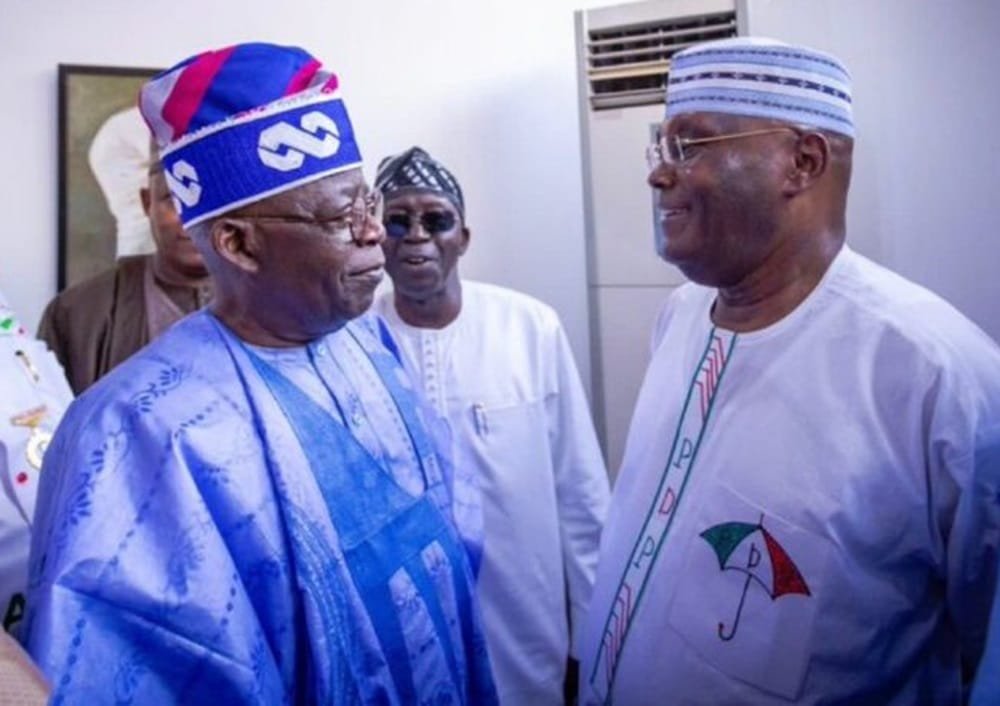
Former Vice-President Atiku Abubakar has urged President Bola Tinubu to urgently reduce fuel prices and ease the crushing cost of living in Nigeria hitting millions of households.
Speaking on Friday in Abuja, the former presidential candidate warned that the total petrol subsidy removal had triggered severe economic hardship, driving up food, transport, and manufacturing expenses across the country.
Atiku urged the administration to review its economic stance, offering his own policy framework to provide immediate relief to citizens struggling with basic survival.
“Use that time to reduce the burden on Nigerians. If your government requires policy ideas or technical input on how to bring relief, I am prepared to make mine available. If you need the framework, I will provide it. Implement it under your government. Give it whatever name you choose. Take the credit. I ask for only one thing: Let Nigerians breathe,” Atiku stated.
Economic Burden of Fuel Prices on Everyday Life
The former vice-president noted that citizens have borne the full weight of petrol subsidy removal since May 29, 2023, without meaningful structural support. He explained that escalating energy expenses have created a destructive ripple effect throughout the national supply chain, directly worsening the cost of living in Nigeria for families, traders, and small business owners.
“When petrol becomes expensive, transportation becomes expensive. When transportation becomes expensive, food becomes expensive,” he said.
He highlighted how farmers pay higher transport charges to move harvest to urban hubs, market traders spend more to restock shelves, and workers burn a massive portion of their wages on daily commutes.
“In the end, the Nigerian family receives the bill,” he remarked. “When government makes energy expensive, it makes life expensive.”
Rejecting Arrogance Over Escalating Fuel Prices
Atiku pushed back against earlier statements from the presidency dismissing his calls to slash fuel prices. He recalled that President Tinubu had previously described his policy suggestions as demonstrating “serious ignorance” of governance and macroeconomic reality.
Atiku questioned whether key stakeholders, including the Nigeria Labour Congress, petroleum marketers, and manufacturers who have voiced identical worries, were also ignorant.
“When workers, producers, marketers and ordinary families are all raising the alarm, government must listen,” he asserted.
He stressed that true leadership requires “the humility to confront the consequences of policy and the courage to change course,” urging the president to set political rivalries aside.
“Bola Tinubu should not be ashamed to do it because Atiku Abubakar proposed it,” he noted. “And if responsible intervention can lower prices, intervene. If changing course can help Nigerian families, change course.”
Why Palliatives Cannot Fix Fuel Prices Strain
Faulting the federal government’s heavy reliance on emergency relief packages, Atiku maintained that distributing food items fails to fix systemic structural failure. He warned that cash transfers and grain distributions cannot counter the damage caused by high energy costs.
“Palliatives manage pain. Good policy addresses the source of the pain,” Atiku insisted. “Do not make life unbearable and then distribute bags of rice as evidence of compassion.”
He further warned the administration against repeating its policy mistakes regarding power sector reforms. With plans underway to phase out electricity subsidies by 2027, Atiku cautioned that households already suffering from elevated fuel prices cannot absorb extra utility hikes.
“The lesson of petrol must not be repeated with electricity,” he warned. “Do not remove first and think later. Do not impose the pain first and search for palliatives afterwards.”
Alternative Atiku Abubakar Policy Proposal for Local Refineries
Presenting an alternative direction, Atiku outlined his own Atiku Abubakar policy proposal for the energy sector ahead of the 2027 presidential contest. He promised a targeted, transparent production subsidy strictly reserved for petroleum products refined locally within Nigeria.
Under his proposed framework, imported petroleum items would be fully excluded from government subsidies. The program would operate with strict spending ceilings, requiring explicit National Assembly approval alongside regular independent audits.
“Economic growth must enter the home. It must enter the market basket. It must show up in the purchasing power of the worker,” he observed. “Nigerians do not live on statistics. They live on what their hard-earned money can buy.”
He called on President Tinubu to act within his remaining term to bring down fuel prices and rebuild public trust.
“I am prepared to compete with you politically. But I will never compete with the welfare of the Nigerian people,” Atiku concluded. “The presidency may be contested. The wellbeing of Nigerians should never be.”