
A Nigerian-American businessman, Mr. Badetito Obafemi, has appealed to President Bola Ahmed Tinubu and the Economic and Financial Crimes Commission (EFCC) to intervene in an alleged multi-million-dollar international fraud case. He is seeking an update on the EFCC fraud investigation that followed his petition of May 17, 2024.
Through his solicitors, Falana & Falana’s Chambers, Obafemi named Mr. Quadri Babatunde Ayanwale, Polaris Bank Limited and several Bureau de Change (BDC) operators and associates in the petition. Their names are in the petition documents. The allegations have not been established by a court in Nigeria, and no response from those named was included in the information supplied to this publication.
EFCC fraud investigation: what the petitioner alleges
Obafemi alleges that he was wrongly implicated in the United States and imprisoned for offences he did not commit. He says those he considers responsible for the transactions remain at large in Nigeria. He also says the matter led to the collapse of his aviation and travel businesses in both countries, investigations by American law enforcement agencies, loss of property, and substantial financial and personal hardship.
According to the petition, Obafemi is a dual Nigerian and US citizen who built aviation, logistics and travel businesses in both countries. He developed an online booking platform in 2013. In 2015 he incorporated Easytickets Limited in Nigeria and partnered with more than 500 local travel agencies.
How the alleged $4m transactions began, according to the petition
The business later struggled to repatriate proceeds from Nigerian ticket sales to international airlines, which required payment in US dollars. Obafemi says he sought help from the then Skye Bank, now Polaris Bank, and was referred to its Alausa branch. There he allegedly met Ayanwale, who introduced himself as a senior staff member in the foreign exchange department.
The petition alleges the following:
– In August 2016, Ayanwale said a bank customer had arranged a transfer into Obafemi’s US account. Obafemi requested $170,000.
– On August 16, 2016, he was told $230,000 had been deposited into the company’s Bank of America account. He allegedly questioned the extra $60,000.
– Ayanwale then allegedly instructed him to move the excess to two US bank accounts belonging to named individuals.
– As sales grew, Obafemi approached Zenith Bank and Access Bank, where he was introduced to BDC operators. Over 12 to 18 months he allegedly bought more than $4 million from them and their associates, believing the transactions were legitimate.
His lawyers say he learned after his 2021 arrest in the United States that funds tied to these transactions had allegedly been fraudulently obtained. They say the FBI and the US Department of Homeland Security told him some of the victims were elderly and retired. The lawyers also allege that US authorities shut down his businesses, revoked licences, placed liens on his assets and closed the company’s website. They say he was imprisoned for 16 months and two weeks and placed under 24-hour house arrest for 30 months after supplying documents to assist the FBI’s investigation.
EFCC fraud investigation: acknowledged in 2024, no update since
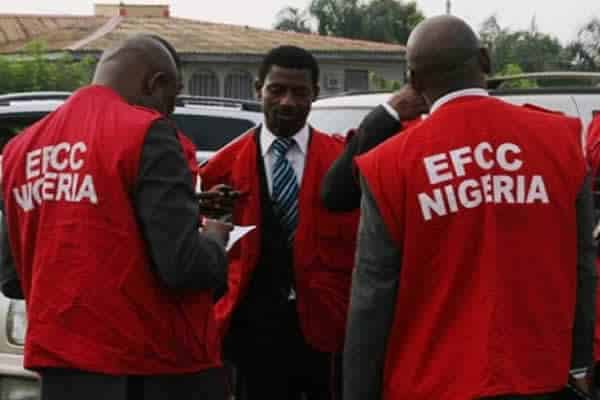
Documents supplied by the lawyers show that the EFCC acknowledged the petition. In a letter dated June 19, 2024, the commission said the petition had been approved and assigned for investigation. It invited a representative of Falana & Falana’s Chambers to an adoption and interview session on June 26, 2024, at its Ikoyi office in Lagos. The letter cited Section 38(1) and (2) of the EFCC (Establishment) Act, 2004.
The documents confirm that the petition entered the investigative process. They do not show the outcome, or whether anyone named has been charged or prosecuted.
Nearly two years later, on April 21, 2026, the law firm wrote to the Acting Zonal Director of the EFCC Lagos Zonal Directorate. The letter, signed by Colins Aigbogun, requested a formal status report. It said repeated visits had produced no clear information despite the submission of what it called overwhelming evidence. It named the Economic Governance Crime Section as handling the case and offered to cover necessary administrative costs.
The request raises a public-interest question: what has happened to the investigation since the EFCC approved the petition in June 2024?
What Obafemi wants from Tinubu and the EFCC
Obafemi is appealing to President Tinubu, the Attorney-General of the Federation, the EFCC chairman and other relevant authorities. He wants:
– an independent, thorough and transparent investigation into the transactions and the roles of the individuals and institutions named;
– cooperation between Nigerian and American authorities to trace the funds and identify their beneficiaries;
– prosecution of anyone found culpable, and recovery of any funds established to have been fraudulently obtained;
– an investigation of his own alleged role in the transactions.
The EFCC had not publicly responded to the April 2026 letter at the time of publication.