

One of the most challenging conversations that routinely hold in the clinic begins with a moment of complete disbelief. A patient comes in for a routine pre-employment health screening, a prenatal checkup, or a voluntary blood donation, only for their lab results to return positive for Hepatitis B Virus (HBV).
Their immediate reaction is almost always the same: “Doctor, that must be a mistake. I feel completely fine. I’ve never been sick, and my eyes have never turned yellow.”

This reaction is entirely understandable, but it highlights one of the most dangerous misconceptions in modern medicine: the belief that a serious viral infection will always make you feel ill. In reality, Hepatitis B is notoriously dubbed a “silent killer” precisely because millions of people carry, transmit, and suffer long-term liver damage from the virus without experiencing a single obvious symptom for years—or even decades.
Why Is Hepatitis B So Silent?
To understand how you can have Hepatitis B without knowing it, it helps to understand how the virus behaves once inside the human body.
When Hepatitis B enters the bloodstream, it targets the liver cells (hepatocytes). However, the virus itself does not directly destroy liver cells in a violent, immediate way. Instead, much of the damage caused by Hepatitis B is the result of the body’s own immune response trying to clear the infected cells.
1. The Asymptomatic Acute Phase: When adults contract acute Hepatitis B, approximately 50% to 70% experience no noticeable symptoms at all. For those who do experience symptoms, they are often so mild and non-specific—such as light fatigue, low-grade fever, mild joint aches, or a transient loss of appetite—that they are routinely brushed off as a passing cold, work stress, or malaria. The classic “textbook” symptom of hepatitis—jaundice (yellowing of the skin and eyes)—occurs in less than half of adult cases.
2. The Silent Chronic Phase: If the body’s immune system fails to clear the virus within six months, the infection transitions into Chronic Hepatitis B.
During the chronic stage, the virus continues to replicate inside liver cells at low or high levels. The immune system slowly battles the virus over time, leading to gradual, microscopic scarring of the liver tissue (fibrosis). Because the liver is a remarkably resilient organ that can function even when significantly damaged, a person can live with ongoing liver destruction for 10 to 30 years without feeling sick.
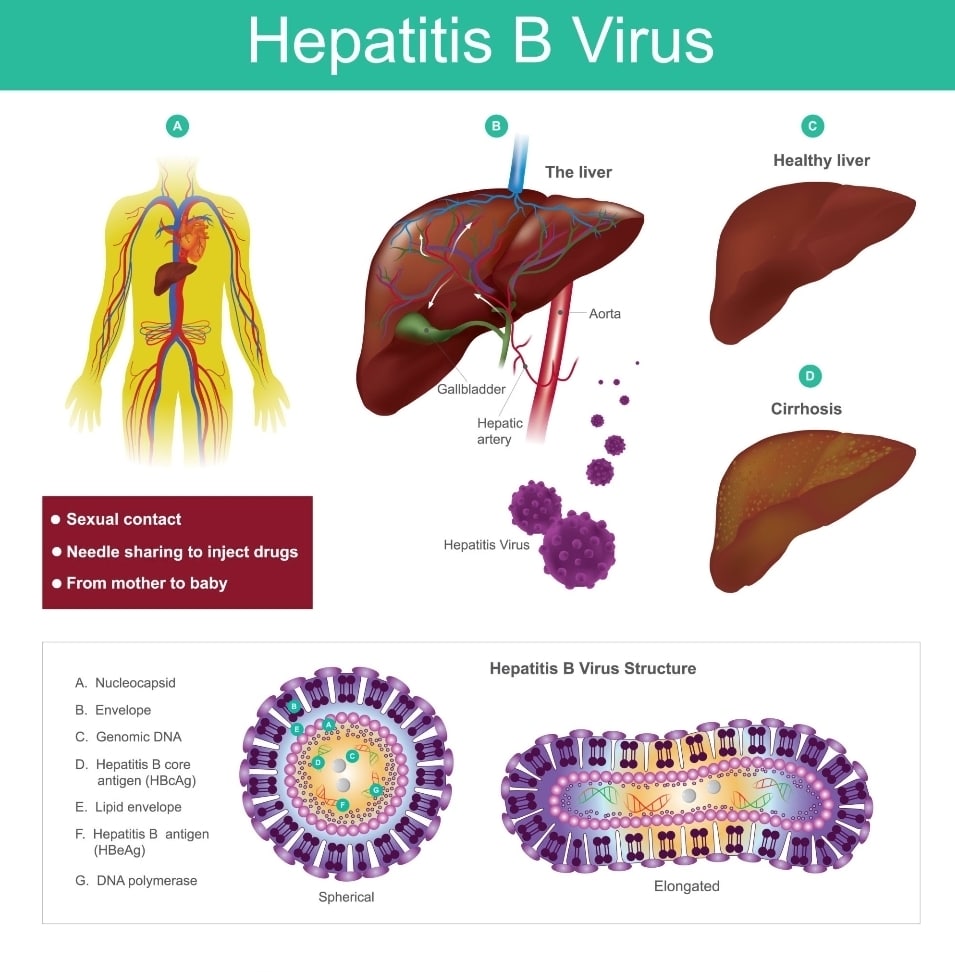
By the time noticeable symptoms finally appear—such as fluid buildup in the abdomen (ascites), severe jaundice, vomiting blood, or extreme physical weakness—the infection has often progressed to advanced cirrhosis or hepatocellular carcinoma (liver cancer).
Unnoticed Transmission: How Do People Catch It?
Another reason people are caught off guard by a Hepatitis B diagnosis is that they misunderstand how the virus spreads. Many assume that if they do not engage in high-risk behaviors, such as intravenous drug use, they are entirely safe.
Hepatitis B is up to 100 times more infectious than HIV and can survive outside the human body on surfaces for at least 7 days while remaining capable of causing infection. Common ways individuals contract the virus without realizing it include:
* Perinatal Transmission (Mother-to-Child): Globally, the most common route of chronic infection occurs at birth. An asymptomatic mother can unknowingly pass the virus to her newborn during delivery. Over 90% of infants infected at birth develop chronic Hepatitis B, carrying it quietly into adulthood.
* Unprotected Sexual Contact: HBV is easily transmitted through blood, semen, and vaginal fluids during sex with an infected partner.
* Shared Household Items: Microscopic amounts of infected blood on shared personal hygiene items—such as razors, toothbrushes, nail clippers, or earring posts—can enter subtle breaks in the skin or mucous membranes.
* Unregulated Medical, Tattoo, or Body Piercing Procedures: Equipment that is not properly sterilized between uses can carry traces of dried blood containing the virus.
Note: Hepatitis B is not spread through casual contact, such as holding hands, hugging, coughing, sneezing, or sharing meals and eating utensils.
The Danger of Unaware Transmission
Living with an undiagnosed Hepatitis B infection poses two major risks:
* Silent Progression of Personal Health Complications: Unmonitored chronic Hepatitis B is a leading cause of liver failure and primary liver cancer worldwide. Early medical management can prevent these outcomes, but only if the infection is identified early.
* Unintentional Transmission to Loved Ones: Because an individual feels completely healthy, they may unknowingly pass the virus to their romantic partners, household members, or unborn children.
Taking Control: The Power of Screening and Prevention
The only reliable way to know your Hepatitis B status is through a simple blood test. You cannot rely on physical symptoms or how energetic you feel.
Medical guidelines strongly recommend screening for Hepatitis B at least once in a lifetime for all adults, during every pregnancy, and periodically for individuals in higher-risk categories. A standard Hepatitis B Blood Panel typically checks for three primary markers:
* HBsAg (Hepatitis B Surface Antigen): A positive result indicates an active infection (acute or chronic).
* Anti-HBs (Hepatitis B Surface Antibody): A positive result means you are protected against the virus—either through successful vaccination or recovery from a past infection.
* Anti-HBc (Total Hepatitis B Core Antibody): Indicates a past or current infection with the virus.
The Best Defense: Vaccination and Management
The most powerful tool against Hepatitis B is prevention. The Hepatitis B vaccine is exceptionally safe and highly effective (providing 80% to 100% protection). It is typically given as a series of doses and is recommended for all infants, children, and unvaccinated adults.
For those who do test positive for chronic Hepatitis B, a diagnosis is not a life sentence. While there is currently no complete cure, highly effective antiviral medications (such as tenofovir or entecavir) can suppress viral replication, dramatically reduce liver inflammation, prevent liver scarring, and lower the risk of liver cancer.
Final Clinical Takeaway
Feeling healthy is not proof of being virus-free. Do not wait for jaundice or abdominal pain to seek medical evaluation—by then, severe liver damage may have already occurred.
Take a proactive step toward protecting your liver and your family: ask your healthcare provider for a routine Hepatitis B screening today.