
Tehran has issued a stark warning that recent Israeli attacks in Lebanon could completely shatter the fragile Iran US ceasefire agreement. The diplomatic alarm follows a direct order from Israel’s Prime minister to launch fresh military strikes on the southern suburbs of Beirut, a move that threatens to plunge the region back into a broader Middle East escalation.
Foreign Minister Abbas Araghchi made Iran’s position clear, stating that the agreement with the US was “unequivocally a ceasefire on all fronts, including in Lebanon” and that “its violation on one front is a violation of the ceasefire on all fronts”.

Israeli Attacks in Lebanon Push Truce to Breaking Point
The latest friction point emerged after Benjamin Netanyahu announced that “terror targets” in Dahieh would be struck. Israel claims these operations are a direct response to ongoing Hezbollah rocket and drone attacks on Israeli civilians, alongside other violations of a separate ceasefire announced in April which has failed to halt active combat.
In the wake of these actions, Iran’s Tasnim news agency reported that Tehran could altogether suspend its indirect negotiations with Washington.
The news agency—which is closely affiliated with Iran’s powerful Islamic Revolutionary Guard Corps (IRGC)—added a chilling warning. It stated that Iran and its allies would “activate other fronts, including the Bab al-Mandab Strait” at the southern entrance of the Red Sea.
While Iranian authorities have not publicly commented on the Tasnim report, state TV confirmed that the probability of the Iran US ceasefire ending was high if Israel did not end its offensive. This crucial truce originally came into force on 8 April.
Diplomatic Rifts Over Middle East Escalation
Washington has repeatedly tried to separate events in Lebanon from its direct negotiations with Iran. However, Tehran has long provided Hezbollah with significant ideological, military and financial backing. Because of this deep relationship, Iran insists that any permanent agreement must include total peace in Lebanon.
Diplomatic efforts are still moving behind the scenes. On Sunday, a US official confirmed that Secretary of State Marco Rubio had proposed a plan for “gradual de-escalation” to both Netanyahu and Lebanese President Joseph Aoun.
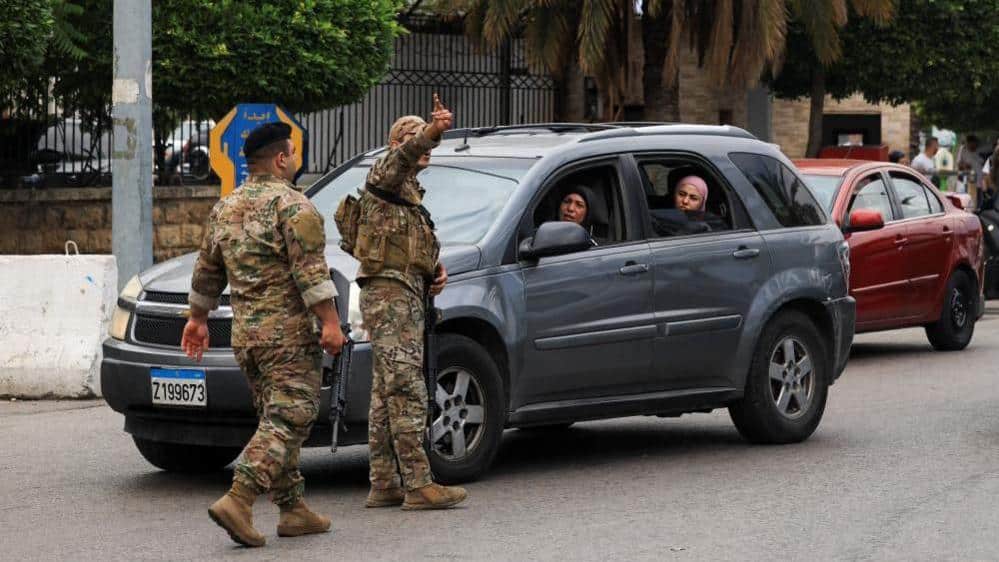
The Israeli military has struck Beirut twice since the ceasefire between Israel and Lebanon officially came into force on 16 April, with the most recent strike landing on Thursday. Observers note this is a clear reduction in violence compared to previous months. Reports suggest the White House has actively pressured Israel to limit its military actions in Beirut to avoid jeopardising a broader peace deal between the US, Israel and Iran.
Strait of Hormuz Oil Markets React to Fresh Conflict
Despite these diplomatic channels, direct friction between Iran and the US escalated significantly in the Strait of Hormuz over the weekend. US officials stated they hit Iranian military sites, while Tehran claimed it responded by targeting a US military base in Kuwait.
Unsurprisingly, the price of Strait of Hormuz oil rose sharply on Monday following the exchange of strikes. Brent crude, the global benchmark for oil prices, jumped almost $5 (£3.7) a barrel to $97.44 (£72.45).
Energy prices have remained highly volatile since Israel and the US launched strikes against Iran on 28 February, with every potential peace deal or sudden Middle East escalation sending shockwaves through the market. The three-month-long war has effectively closed the vital Strait of Hormuz waterway, pushing up global energy costs at a time when consumers are already feeling the pinch. Around a fifth of the world’s oil and liquefied natural gas (LNG) supplies usually pass through this narrow strait.
US President Donald Trump has repeatedly suggested in recent days that Washington and Tehran are close to a permanent deal and that negotiations are progressing. However, despite the optimistic rhetoric from the White House, no formal agreement has been reached, and the shadow of war continues to hang heavily over the region.