

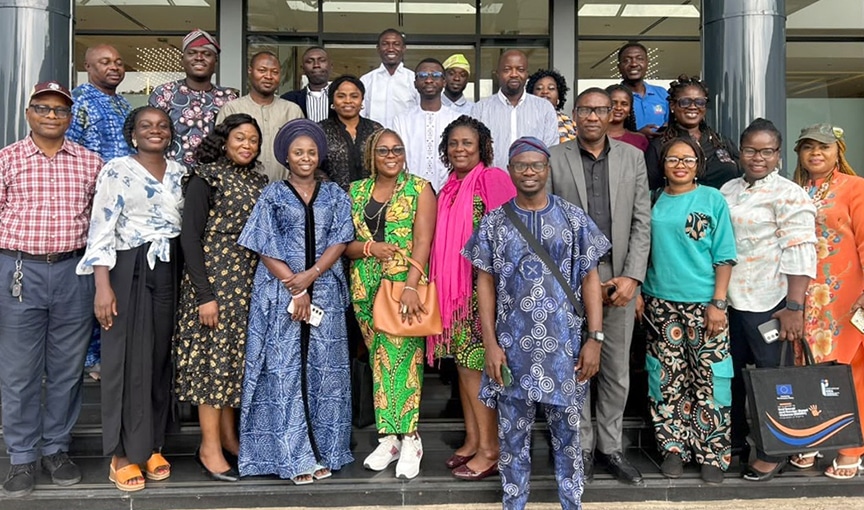
The European Union has partnered with Nigerian agencies to launch a specialist media corps targeting systemic sexual violence in Oyo State.
The two-day inauguration in Ibadan, which concluded on August 20, brought together 25 selected journalists to strengthen local legal enforcement and widen rural survivor support pathways. Funded by the EU and executed by the International Institute for Democracy and Electoral Assistance (International IDEA) alongside the National Agency for the Prohibition of Trafficking in Persons (NAPTIP), the programme targets structural barriers preventing prosecution.

The initiative moves beyond standard public awareness by embedding reporters into a three-month operational plan. NAPTIP Director General Hajiya Binta Lami Adamu Bello, represented by press head Vincent Adekoye, charged the media corps to confront local norms shielding perpetrators.
NAPTIP remains committed to exposing atrocities bordering on human rights violations and ensuring justice through the laws,” Mr Adekoye said. He urged reporters to challenge practices that violate survivor rights across regional communities.
Transforming Legal Frameworks into Rural SGBV Response Mechanisms
Nigeria continues to struggle with low conviction rates for gender-based crimes, particularly outside state capitals where informal resolution mechanisms often bypass statutory law. While Oyo State domesticated the Violence Against Persons Prohibition (VAPP) Act in 2020, enforcement remains uneven across rural districts.
By binding investigative media to concrete legal channels, the initiative aims to force accountability within municipal police divisions and local courts.
Lead trainer, Mrs Toyin Adewale Gabriel, stressed that journalists must use state instruments, including child rights statutes, to ensure offences reach formal trial rather than private settlements.
Organisers urged the media corps to campaign directly for operational Sexual Assault Referral Centres (SARCs) throughout all local government areas in Oyo State.
Media Corps: Ethical Safeguards and Case Tracking Protocols
To prevent media coverage from causing further harm, trainers outlined strict protocols against survivor identification and sensationalism. Media mentor Almsfree instructed participants to track cases systematically from initial arrest through court verdicts.
“Avoid sensational stories, victim-blaming, and unethical reporting,” Mrs Gabriel said. Reporters were instructed to “prioritise access to referral pathways and protect survivors of sexual assault from shame, guilt, stigmatisation and retaliation, with rapid, timely medical, psychosocial and legal support and referral.
The workshop emphasised core legal definitions under Nigerian statutory law, specifically reinforcing that minors cannot give legal consent under any circumstance.
NAPTIP Oyo State Commandant, Kayode Alfred, confirmed that field units will coordinate with the corps to track pending investigations. The 25 journalists now begin a mentored execution phase to monitor local prosecutions and referral access across the state for four years.