

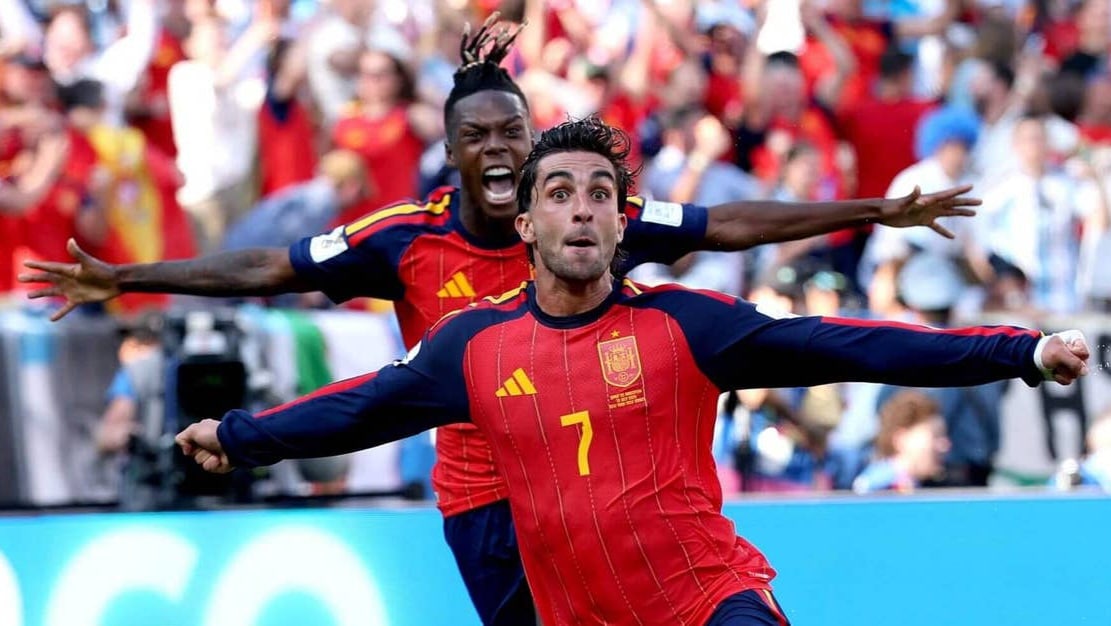
Spain won the 2026 World Cup final on Sunday after Ferran Torres scored in extra time to defeat ten-man Argentina 1-0.
The Barcelona winger broke the deadlock in the 106th minute, converting after Nico Williams rescued Pedro Porro’s deep cross.

Spain dominated the contest in New York, recording 20 shots to Argentina’s two. However, Lionel Scaloni’s side disrupted the match through persistent delays and physical fouls.
The game turned permanently against Argentina when Enzo Fernández received a second yellow card late in regulation time.

Goalkeeper Emi Martínez made several fine saves to keep Argentina level, but their defensive resistance collapsed late in extra time. Lionel Messi, making his final World Cup appearance, did not manage a shot until the 115th minute.
Tempers flared after the final whistle. Nahuel Molina and Leandro Paredes confronted Spanish players, resulting in a brief brawl and a red card for Paredes after he shoved Gavi.
Beyond the Pitch: How Corporate Spectacle Hijacked Football’s Biggest Stage
The match highlighted a growing tension between elite sporting competition and FIFA’s ambition to transform the tournament into a global entertainment brand.
A halftime show featuring Madonna and Justin Bieber extended the interval to more than 27 minutes. The extended break favoured Argentina’s disruption strategy while delaying the rhythm of a global showpiece.
FIFA’s president, Gianni Infantino, described the tournament as “the most incredible event in human history.
Infantino watched the match alongside political leaders, including US President Donald Trump, Canadian Prime Minister Mark Carney, Mexican President Claudia Sheinbaum, and King Felipe VI of Spain.
2026 World Cup Final: Commercialisation and Political Visibility at FIFA’s Showpiece
The pre-match ceremony included performances by Jennifer Hudson and Robbie Williams, alongside an address from actor Tom Cruise.
“Football is a force that unites people,” Cruise told the stadium crowd before kick-off.
The entertainment sequence caused a six-minute delay to kick-off. The event demonstrated how FIFA’s commercial model now prioritises broadcast spectacle and political visibility alongside the sport itself.