
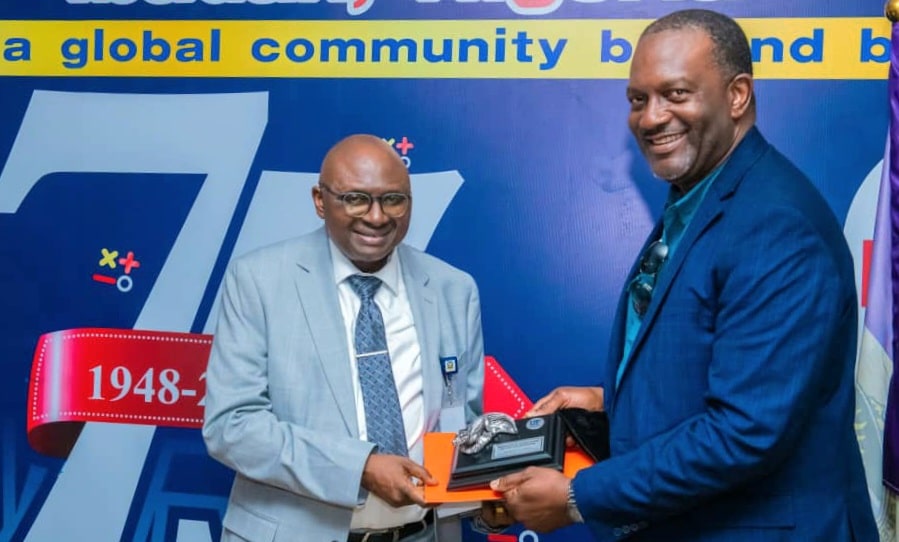
The Vice-Chancellor of the University of Ibadan, Professor Kayode O. Adebowale, has asserted that the Yoruba language continues to expand its global footprint, describing the tongue as an entire way of life rather than just a cultural heritage.
Speaking during a courtesy visit to his office, the University of Ibadan VC welcomed an influx of foreign researchers and students currently hosted by the university’s premier Yoruba Flagship Centre. The visiting academics have plunged directly into advanced African cultural studies to understand the deep societal frameworks built around the language.
Professor Adebowale stated that the language reflects human relationship and serves as an important medium for socialization and identity.
According to the Vice-Chancellor, the sheer variety of international backgrounds represented among the current cohort proves that indigenous African communication systems hold immense value on the world stage. He noted that the increasing interest of foreign scholars in learning the Yoruba language demonstrates its global relevance and growing acceptance across the globe.
Cultural Preservation and Globalisation
True linguistic immersion goes beyond simple classroom vocabulary. Professor Adebowale emphasised that the Yoruba language carries profound cultural values and social significance, adding that it plays an important role in preserving traditions, fostering social interaction, and transmitting indigenous knowledge.
The university administration views these international exchanges as a core component of its modern educational mission. He encouraged the visiting scholars to continue learning the language and immerse themselves in the Yoruba culture, reiterating the university’s commitment to promoting indigenous languages and cultural studies.
The Vice-Chancellor said he was delighted to see foreigners develop interest in learning the Yoruba language, stressing that such efforts contribute to the preservation and internationalization of the language. He reaffirmed the commitment of the university administration to supporting the Yoruba Flagship Centre in the fulfillment of its mandate.
Expanding Academic Alliances
The physical infrastructure backing these studies has seen rapid improvement to accommodate international workloads. The Director of the Yoruba Language Centre, Dr Clement Odoje explained that the visiting students were foreign researchers with a strong interest in learning the Yoruba language and understanding the culture of the Yoruba people.
To ensure this educational pipeline remains strong, institutional partnerships are moving forward rapidly. He recalled that a proposal for collaboration with SOAS University of London, with a view to strengthening academic exchange and research opportunities had been designed and drew the Vice-Chancellor’s attention to the exigencies of its consideration.
Dr Odoje expressed appreciation to the Vice-Chancellor for the support given to the centre, particularly the recent installation of a solar power system at the centre. He noted that the facility has greatly improved operations at the centre and created a conducive environment for international students.
Among the prominent visiting scholars actively participating in the current semester are Dr Claire Ní Cheallaigh (Iyabo) of University College, Dublin; Ms. Priscilla Campos (Funmilayo) of the Federal University of São Paulo and the University of the Western Cape, and Mr. Adams Rodgers John (Ayanyemi) of SOAS University of London.