
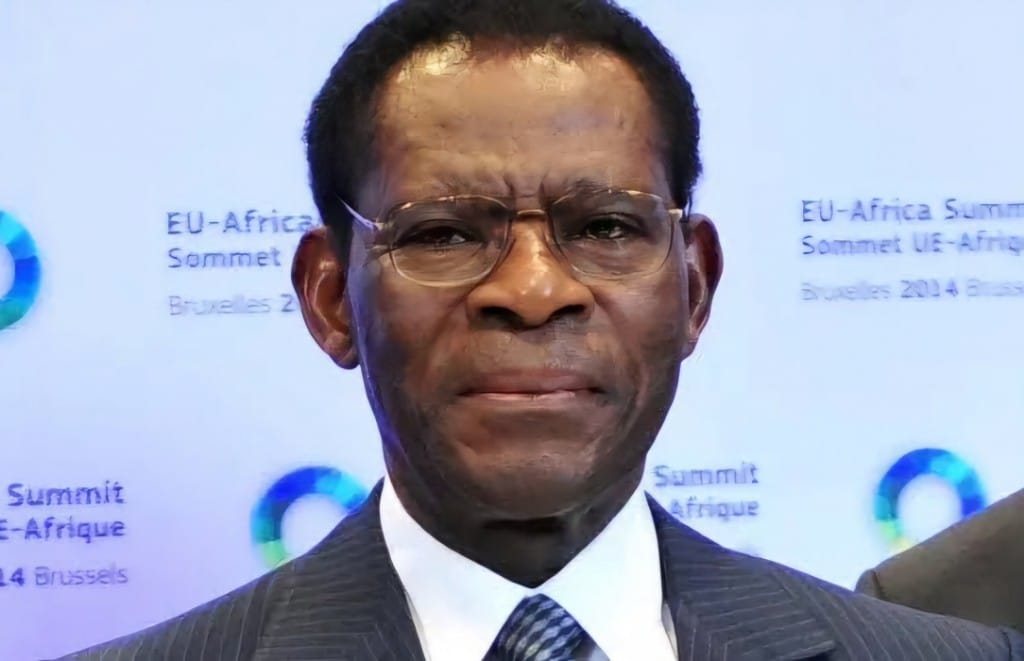
The political landscape of Equatorial Guinea prior to the rise of Obiang Nguema was characterized by extreme turbulence and volatility. The nation, having gained independence from Spain in 1968, was initially led by Francisco Macias Nguema. His leadership, however, was marred by widespread human rights abuses and authoritarianism. Macias established a regime that was steeped in oppression, effectively eliminating political dissent through brutal measures, including killings, torture, and imprisonment of perceived adversaries. This cultivated an environment of fear and unrest in the small West African nation.
Obiang Nguema: Rise to Power – A Coup and Its Aftermath
Amidst the escalating socio-political crisis, including a crumbling economy and pervasive insecurity, Obiang Nguema, who had served as a military leader under Macias, orchestrated a coup d’état on August 3, 1979. The bloodless takeover was aimed at overthrowing a regime that had driven the country to the cusp of collapse. Following the coup, Obiang quickly consolidated power by assuming the presidency, thereby marking the beginning of his long tenure as a leader. The event signified not just a shift in leadership but also an abrupt change in the country’s direction.

The aftermath of the coup was significant. Obiang Nguema initiated a series of state-led reforms designed to stabilize the nation and reduce the prevailing chaos. Despite these intentions, the fallout from his ascension included mass exodus as many citizens sought refuge abroad, fearing retribution for their association with the ousted regime. Additionally, sweeping purges occurred within the military and government, leading to trials and executions of former officials linked to Macias’s oppressive rule. Such actions set a firm tone for Obiang’s reign and defined the political landscape of Equatorial Guinea in the decades to follow, establishing a government that would become notorious for its authoritarian practices.
Three Decades of Leadership: Policies and Governance
Since assuming power in 1979, Obiang Nguema has implemented various policies and governance strategies that significantly shaped Equatorial Guinea’s socio-political landscape. One of the notable early moves was the relaxation of restrictions on religious practices, particularly the lifting of the ban on the Catholic Church. This initial shift signaled a broader, albeit limited, acknowledgment of personal freedoms within the confines of his authoritarian rule. By allowing religious organizations to operate, Obiang aimed to bolster his legitimacy domestically while also fostering a more favorable view internationally, particularly in the eyes of Western nations that value religious freedoms.
Despite these initial gestures toward greater openness, Obiang has maintained tight control over political power. His governance is characterized by the absence of genuine political pluralism; the opposition parties remain vulnerable and heavily constrained. This political environment restricts civil liberties and stifles dissent, rendering the leadership’s claims of democratic development superficial. The ruling party, the Democratic Party of Equatorial Guinea, effectively dominates the political landscape, and elections are frequently criticized for lacking fairness and transparency.
Furthermore, Obiang’s policies extend beyond political maneuvers; they encompass economic strategies that have garnered both domestic and international attention. The discovery of substantial oil reserves in the 1990s transformed Equatorial Guinea’s economy, yet the benefits of this wealth have not been equitably shared. Many observers have pointed to a systemic issue of corruption and mismanagement of resources, as wealth is concentrated within the ruling elite and not reinvested in public services or welfare. Consequently, while Obiang’s tenure has seen economic growth on paper, the majority of the population remains impoverished and disenfranchised, leading to ongoing human rights concerns. Through his complex governance strategies, Obiang’s leadership ultimately reflects a consolidation of power at the expense of civil liberties and economic equity.
The Elections: Controversies and Allegations against Obiang Nguema
The electoral landscape in Equatorial Guinea, especially under the leadership of Teodoro Obiang Nguema, has been marred by controversies and allegations that raise significant questions about the democratic processes in the nation. The presidential elections of 2002 and 2009 serve as poignant examples of the systemic issues surrounding elections during Obiang’s extended rule. In these elections, allegations of extensive electoral fraud surfaced, primarily centered around the manipulation of voter registrations, ballot tampering, and the obstruction of opposition participation.
Particularly in 2002, opposition candidates faced significant hurdles that culminated in their withdrawal from the electoral race. This strategic maneuver became a recurring theme in subsequent elections, reflecting a broader trend of suppressing dissent and consolidating power. Such actions not only undermined the electoral process but also contributed to a political environment characterized by fear and intimidation, fundamentally challenging the notion of a fair and transparent election.
The outcomes of these elections have been particularly striking. For instance, Obiang declared a victory with over 97% of the vote, a figure that drew skepticism both domestically and internationally. The discrepancy between the reported results and the reality perceived by many observers only fuelled a narrative of electoral malpractice. This overwhelming majority continues to generate doubt about Obiang’s legitimacy as a leader, as many argue that such results could not be realistically achieved in a context where opposition is systematically curtailed.
The implications of these reported electoral successes extend beyond national boundaries, influencing Equatorial Guinea’s international relations. Despite the evident shortcomings within the electoral process, Obiang’s government has often managed to maintain a facade of legitimacy on the global stage. This duality illustrates the complexities involved in navigating a political system that prioritizes the maintenance of power over genuine democratic principles, thereby setting the stage for an ongoing struggle between governance and legitimacy.
Legacy and Future Prospects: What Lies Ahead for Equatorial Guinea?
Obiang Nguema’s lengthy tenure as Africa’s longest-serving leader has left an indelible mark on the political and socioeconomic landscape of Equatorial Guinea. His administration is often characterized by its authoritarian style, which has engendered significant debate regarding governance, accountability, and democratic principles. Despite substantial oil revenues that have the potential to transform the nation, the wealth has predominantly benefited a select few, leading to rampant inequality and widespread poverty among the populace. This legacy raises pertinent questions about the political stability and future governance of Equatorial Guinea.
As Obiang continues his rule, the challenges facing the nation are multifaceted. Equatorial Guinea grapples with high unemployment rates, inadequate infrastructure, and limited access to quality healthcare and education. The dependence on oil, which constitutes a considerable portion of national income, renders the economy vulnerable to fluctuations in the global market. Consequently, there is a pressing need for sustainable development initiatives to diversify the economy. Future leadership must prioritize economic reforms that address these issues, ensuring that the benefits of natural resources translate into tangible improvements for the broader population.
The implications of long-term leadership also extend beyond Equatorial Guinea. Obiang’s governance pattern could affect the political dynamics surrounding neighboring countries, many of which share similar issues of authoritarian rule and human rights concerns. As the region contemplates its political future, there may be a possible shift towards greater civil engagement and demand for democratic practices, driven by increasing awareness and mobilization among citizens. Ultimately, the trajectory for governance in Equatorial Guinea and its neighboring states will hinge on the delicate balance between leadership continuity and calls for reform, presenting critical challenges and opportunities in the years ahead.