
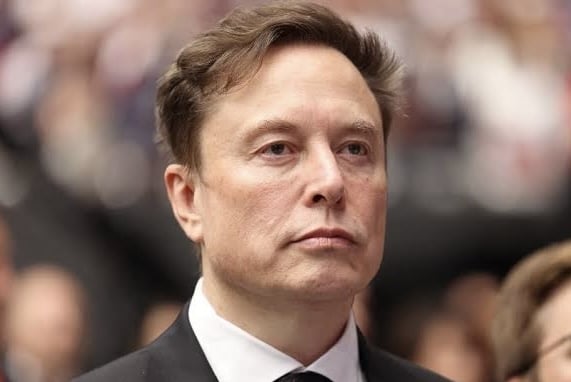
Tech billionaire Elon Musk has predicted that artificial intelligence will outperform the sum of all human intelligence within five years.
Speaking to The Economist on Thursday, the Tesla and SpaceX chief executive warned that the rapid momentum behind the technology had now moved beyond external control.

While previously voicing existential concerns over automated systems, Musk stated he had adopted a more pragmatic perspective on the relentless speed of innovation.
“I think AI may exceed the sum of human intelligence in around five years. There really won’t be anything that AI can’t do better than humans, apart from being human, perhaps,” he told The Economist.
“The most likely outcome is an age of amazing abundance, where anyone can have anything they can think of. This may sound preposterous, but here we are in 2026; let’s see where we stand in 2036,” he added.
Elon Musk AI prediction exposes deep split over safety oversight
The assertion that software will soon outperform humans across every sector highlights a growing debate between tech leaders and policy regulators.
Musk accepted that while the risk of catastrophic outcomes remains real, halting global research is no longer a practical option for the industry.
“I still think there’s risk associated with AI and robots. It’s not zero. I guess I’ve come to my philosophical conclusion to look on the bright side. I can’t see any way to really stop this incredible momentum of AI and robots,” he said.
“Let’s enjoy the ride” is my philosophy at this point because there seems to be just an inexorable progress here in AI and in robots that even if I wanted to stop it, I don’t. I couldn’t,” Musk added.
For government ministers and economic planners, a five-year shift toward total automation presents unprecedented challenges for labour markets and national infrastructure.
If computational models surpass the human intelligence benchmark so swiftly, standard regulatory approval processes may quickly become obsolete.
Industry self-regulation vs state intervention
To mitigate severe systemic failures, Musk urged rival technology firms to bypass slow-moving state legislation and establish direct peer-review mechanisms.
He proposed that leading developers hold frequent, mandatory meetings to evaluate new software models before public release.
The competitors can keep each other honest,” Musk said, arguing that rival companies were better placed than governments to determine whether an AI system posed a security risk.
He stressed that swift implementation remains vital, given the continuous stream of technological breakthroughs across the globe.
“There are so many AI breakthrough announcements, sometimes multiple per day,” he said.
Despite Musk’s stark timeline, several computer scientists and artificial intelligence safety researchers express skepticism over his forecasts.
Industry analysts point out that current frontier models, despite rapid progress, still lack genuine reasoning, spatial awareness, and the nuanced adaptability that define human thought.
Whether the current wave of development can overcome these fundamental bottlenecks within fifty months remains a subject of intense global scrutiny.
AI Job Automation Will Render Human Work Obsolete
REPORTERS AT LARGE earlier reported that Musk warned that rapid AI job automation will leave human workers with no remaining tasks to perform. Speaking to XPRIZE founder Peter Diamandis at the Abundance Summit, the Tesla and SpaceX chief executive predicted that artificial intelligence and humanoid robots will soon generate an abundance of goods and services that vastly exceeds human demand.