
US President Donald Trump has announced a US-Iranian strike cancellation, citing regional requests to negotiate a broader diplomatic package.
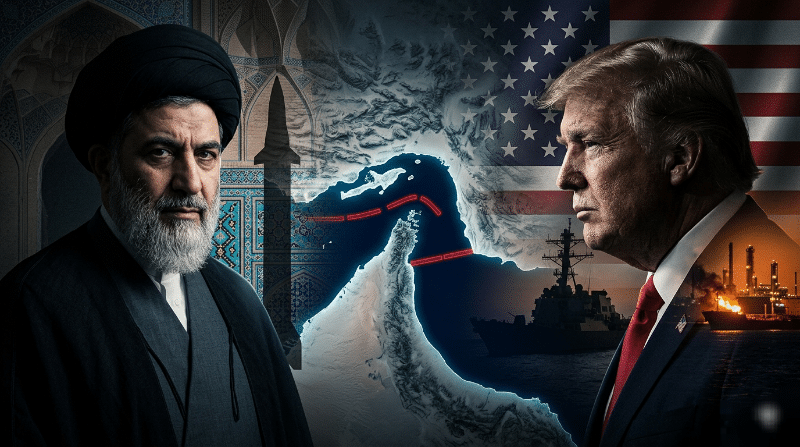
Writing on Truth Social, Mr Trump said he agreed to pause military action after leaders across the Middle East asked him to “hold off” because the “perimeters” of a deal had been established. He stated any final agreement must include reopening the Strait of Hormuz and removing Iran’s nuclear threat.
The announcement follows reports from American media indicating Washington prepared intensive air operations over the weekend. American officials had reportedly drawn up plans alongside Israel targeting Iranian energy facilities.
Speaking during a cabinet meeting on Friday, Mr Trump was heard telling reporters, “We’ll be hitting them [Iranians] very hard. At some point, they’re going to say, ‘We just can’t take it anymore.'”
Later in his social media post, the US president warned that American forces remained “locked and loaded and ready to go against the Islamic Republic of Iran, at levels of Military Terror, Strength, and Power not seen since World War II”. He added that pausing the strikes was intended “for the future benefit of the world and, likewise, the survival of a successful and prosperous Iran”.
Government officials in Tehran have not formally responded to Mr Trump’s statement. However, Iranian diplomats accused Washington earlier on Saturday of raising tensions, warning that regional states supporting American forces would be “engulfed by the flames of war”.
In response to the mounting tension, the US government published an urgent security alert advising citizens throughout the region to maintain vigilance.
Americans currently in the Middle East should exercise caution and heightened vigilance and should be prepared for flight cancellations, periodic airspace closures, and potential travel disruptions,” the alert said.
Diplomatic channels were accelerated on Saturday when Saudi Crown Prince Mohammed bin Salman spoke directly to Mr Trump to express concern over the scope of the planned bombardment.
Middle East Escalation Warning Drives High-Stakes Diplomacy
The sudden diplomatic pivot highlights how close the region came to a wider economic shock. Had Washington executed the planned air campaign against Iranian energy infrastructure, global energy markets would have faced immediate disruption, compounding existing supply bottlenecks.
The military friction traces back to 28 February, when US and Israeli forces began combined operations against Iranian targets. A temporary ceasefire agreed in April collapsed by June, leading to a cycle of retaliatory strikes.
Earlier this week, the Pentagon confirmed a “heavy wave” of strikes against Iranian positions following an attempted ballistic missile attack on American military bases.
The conflict has constrained international commerce. Washington maintains a naval blockade on key Iranian ports, while Tehran has launched missiles and drones at shipping vessels passing through the Strait of Hormuz.
Energy Security and the Strait of Hormuz Oil Blockade
The strategic waterway handles a significant portion of global petroleum traffic. Protracted warfare near the corridor has driven continuous price volatility across global commodity exchanges since late February.
The decision to pause bombardment reflects growing anxiety among Gulf partners regarding potential retaliation against their own infrastructure. Saudi Arabia and neighbouring nations risk direct exposure should regional hostilities spill beyond current containment zones.
Washington now faces a narrow timeframe to convert the tactical pause into verifiable commitments. Without rapid progress on uranium enrichment controls and maritime security guarantees, military planners confirm American assets in the region remain positioned for immediate deployment.